Leading a global city innovation initiative with the MIT City Science Network, spanning international research pilots, industry sponsored workshops, and government collaborations across the U.S., Europe, and Latin America, and delivering scalable, human centered, technology enabled frameworks that help cities and communities co create equitable, resilient, and future ready urban solutions at scale.
Timeline: 2024 - Present.
Industry: Technology, Transportation, Healthcare, Government, etc.
Role: Project Lead and Facilitator
Funding Amount: NDA protected
Research Question: How can technology enabled, participatory design processes support more inclusive forms of global and local governance, enabling communities to envision the future of their cities and bridge equitable access to essential services such as healthcare, mobility, employment, and housing?
NDA Protected Outcomes: Many of the collaborations within this body of work involve global industry partners such as Hyundai and government entities in countries including Andorra and Colombia, and are therefore protected by confidentiality and non disclosure agreements. While specific outcomes and data cannot be publicly shared, all processes, methodologies, and strategic frameworks developed through this work are proprietary to the Future Mobility Design Lab, and I would be happy to explain any aspect of these projects and approaches in more detail upon request.
Why this work matters?
The current societal paradigm is defined by accelerating complexity and deep interconnections across systems that communities, cities, governments, and industries are struggling to keep up with. Most institutions are barely able to respond to present day needs, let alone plan effectively for the future. This work addresses that gap by advancing a new approach that is both human centered and technology enabled. By combining participatory processes with data driven tools such as Digital Twins, AI, and immersive visualization, these methodologies empower communities and decision makers to better understand complex systems, bridge access to essential services, and actively shape the future of the places they live in. Ultimately, this work supports more inclusive governance, shared ownership, and long term resilience by turning uncertainty into collective insight and informed action.

This body of work focuses on advancing a global research and innovation agenda through the MIT City Science Network, exploring how human centered design, emerging technologies, and participatory methods can reshape cities and communities worldwide. Spanning international pilots, sponsored industry workshops, academic exchanges, and government collaborations, the work has led to the development of novel, scalable methodologies that combine Digital Twins, AI, mobile AR, immersive co design, and strategic foresight.
Key efforts include global knowledge exchange and dissemination through events such as the City Science Summit in Concepción, Chile, deep collaboration with MIT leadership through future cities workshops in Boston, the creation and testing of augmented participation frameworks with partners like 3DStreet, real world pilots with the City of Cincinnati, and industry sponsored innovation sprints such as the Future of Mobility and AI workshop with Hyundai.
Together, these use cases demonstrate how this body of work translates research into practice, enabling communities, institutions, and decision makers across the U.S., Europe, and Latin America to co create equitable, resilient, and future ready urban solutions at scale.
4 Case Studies
1. Global City Science Summit in Concepción, Chile
Synopsis
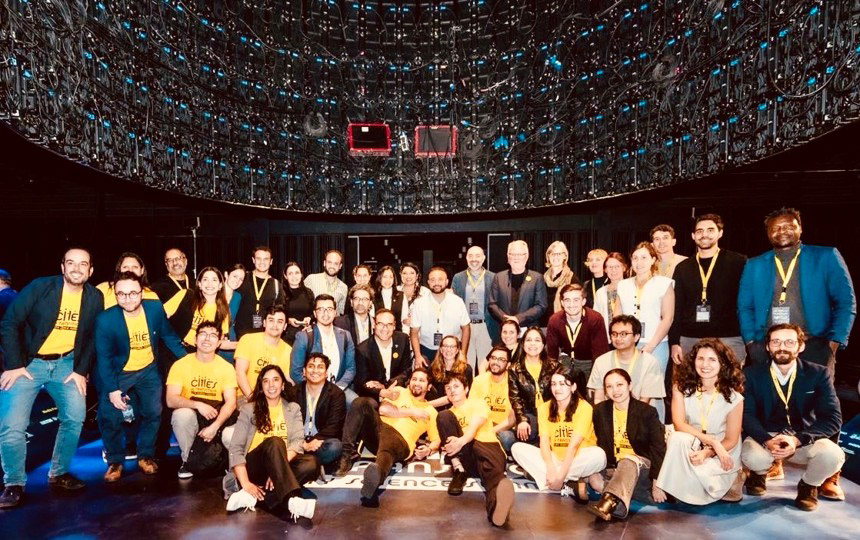
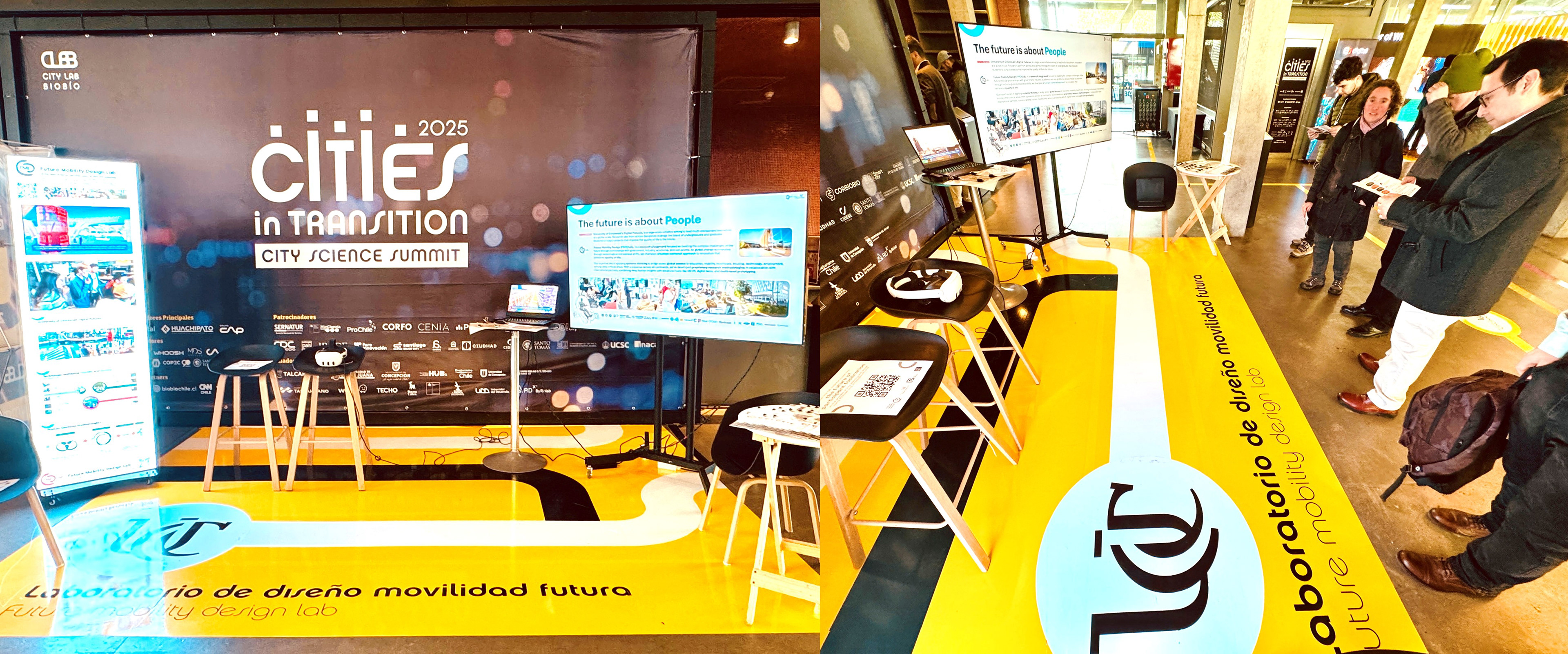
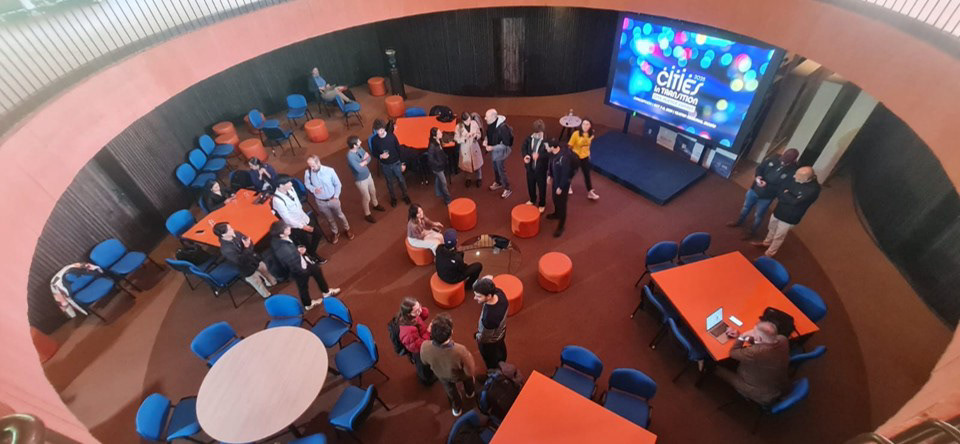
As an official member of the MIT City Science Network, I was invited to the City Science Summit in Concepción, a global gathering of leaders in urban science, planning, technology, policy, and social innovation focused on Cities in Transition. At the summit, I presented and exhibited an innovation booth showcasing the Future Mobility Design Lab’s human centered methodologies, participatory Digital Twin frameworks, and applied use cases addressing access to essential services such as mobility, housing, healthcare, and employment.
As part of the program, I also contributed to data-driven, mobility focused sessions that explored multimodal challenges and user experience in Concepción, connecting global research insights with local urban priorities and reinforcing the role of participatory, technology enabled approaches in informing future city planning.
FMD Booth
Multimodal mobility workshop
Context and Challenge
A series of hands on multimodal mobility workshops were conducted to understand how people move through the city today and how more sustainable, inclusive, and user centered mobility systems could be envisioned for the future. Concepción faces complex mobility challenges shaped by urban form, infrastructure gaps, user experience issues, and equity considerations. The goal of these workshops was to capture real world qualitative and quantitative data directly in the city and translate those insights into practical, evidence based recommendations that city authorities could use to improve everyday mobility and overall quality of life.
A series of hands on multimodal mobility workshops were conducted to understand how people move through the city today and how more sustainable, inclusive, and user centered mobility systems could be envisioned for the future. Concepción faces complex mobility challenges shaped by urban form, infrastructure gaps, user experience issues, and equity considerations. The goal of these workshops was to capture real world qualitative and quantitative data directly in the city and translate those insights into practical, evidence based recommendations that city authorities could use to improve everyday mobility and overall quality of life.
Phase 1, In Situ Data Collection and Urban Observation
The first phase focused on capturing the current state of multimodal mobility access across Concepción through a combination of fieldwork and digital tools. Partnering with a local micromobility company, the team gained access to a fleet of scooters and traveled across multiple neighborhoods to assess mobility conditions across different modes of transport. Workshop participants used a custom Mobile Application developed by the research team to collect mixed methods data at specific locations. Participants could drop GPS pins, take photographs of urban elements, and record qualitative observations about accessibility, safety, comfort, and experience. This approach resulted in hundreds of geolocated data points distributed throughout the city, each enriched with layered qualitative and quantitative insights. In parallel, 360 cameras were used to capture immersive spatial footage, documenting real time mobility conditions and enabling a deeper understanding of the lived experience of moving through the city.
The first phase focused on capturing the current state of multimodal mobility access across Concepción through a combination of fieldwork and digital tools. Partnering with a local micromobility company, the team gained access to a fleet of scooters and traveled across multiple neighborhoods to assess mobility conditions across different modes of transport. Workshop participants used a custom Mobile Application developed by the research team to collect mixed methods data at specific locations. Participants could drop GPS pins, take photographs of urban elements, and record qualitative observations about accessibility, safety, comfort, and experience. This approach resulted in hundreds of geolocated data points distributed throughout the city, each enriched with layered qualitative and quantitative insights. In parallel, 360 cameras were used to capture immersive spatial footage, documenting real time mobility conditions and enabling a deeper understanding of the lived experience of moving through the city.
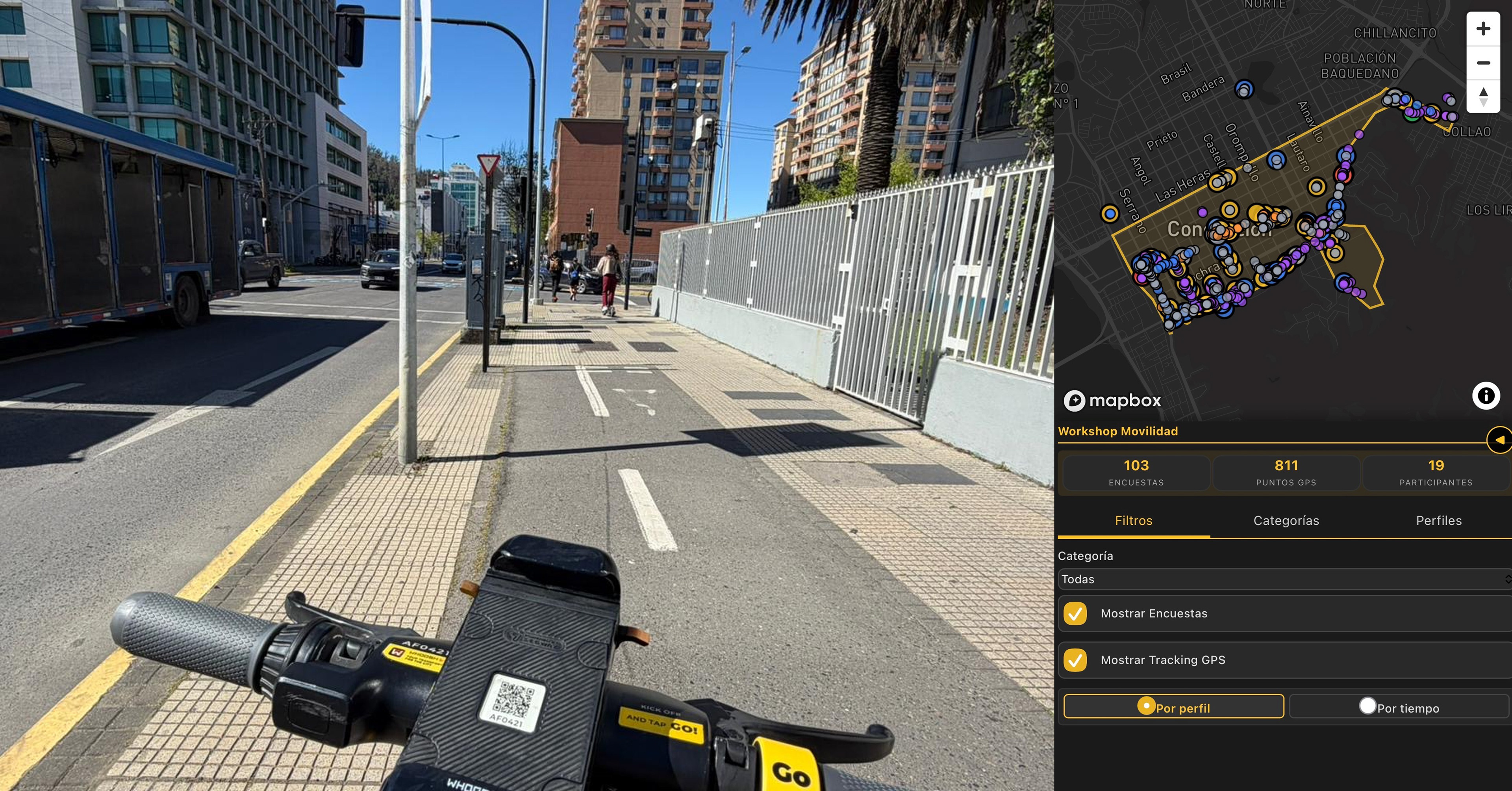
Data collection in Custom App
Phase 2, Co Design and Participatory Prioritization
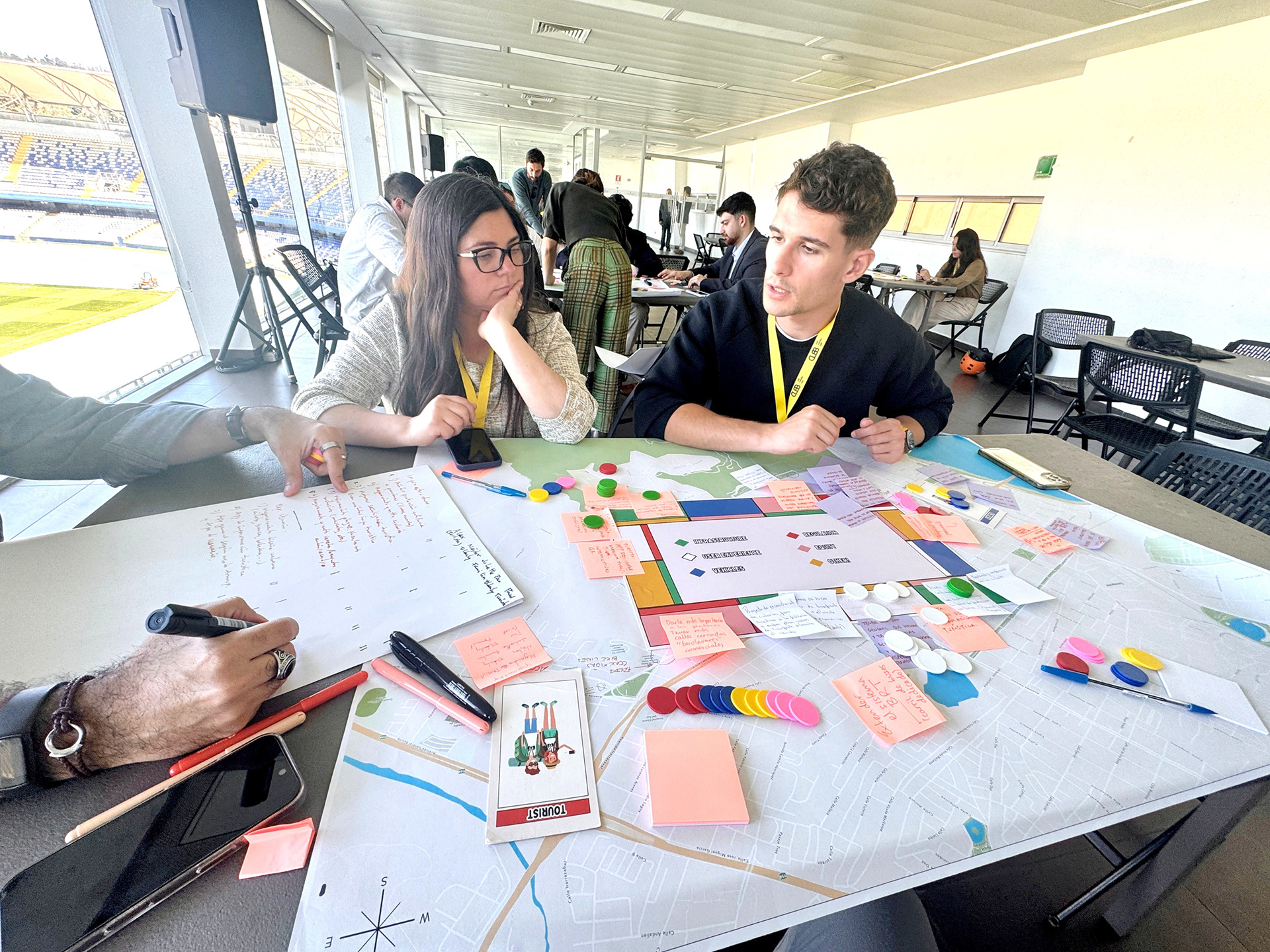
The second phase transitioned from observation to co design through a gamified, participatory workshop format. Participants worked in groups around large scale printed maps of Concepción and a custom game board inspired by the mechanics of Monopoly. Each participant was assigned a specific user persona, such as an aging resident with limited mobility, a tourist family, or a university student, with detailed profiles outlining needs, pain points, and daily journeys informed by prior interviews and testimonies. The game board featured color coded categories representing key dimensions of multimodal mobility, including infrastructure, user experience, regulation, and equity. Using a limited number of tokens tied to these categories, participants collaboratively proposed solutions to improve their assigned persona’s experience. A group wide negotiation exercise followed, where all ideas were presented and collectively weighted using the same token system, simulating real world city budgeting and priority setting processes. Concepts that received the strongest collective support advanced to the next phase.
The second phase transitioned from observation to co design through a gamified, participatory workshop format. Participants worked in groups around large scale printed maps of Concepción and a custom game board inspired by the mechanics of Monopoly. Each participant was assigned a specific user persona, such as an aging resident with limited mobility, a tourist family, or a university student, with detailed profiles outlining needs, pain points, and daily journeys informed by prior interviews and testimonies. The game board featured color coded categories representing key dimensions of multimodal mobility, including infrastructure, user experience, regulation, and equity. Using a limited number of tokens tied to these categories, participants collaboratively proposed solutions to improve their assigned persona’s experience. A group wide negotiation exercise followed, where all ideas were presented and collectively weighted using the same token system, simulating real world city budgeting and priority setting processes. Concepts that received the strongest collective support advanced to the next phase.
Phase 3, Systems Analysis and Strategic Framing
In the final phase, participants and facilitators conducted a deeper analysis of the selected priority directions. Systems thinking methods were introduced to examine interdependencies and long term implications, including STEEP factors and trend forecasting. This phase focused on understanding how infrastructure, policy, technology, and user experience interact at a city scale, and what conditions would be required to implement meaningful change. The discussion moved from isolated interventions toward integrated, future oriented strategies aligned with broader urban and societal trends.
In the final phase, participants and facilitators conducted a deeper analysis of the selected priority directions. Systems thinking methods were introduced to examine interdependencies and long term implications, including STEEP factors and trend forecasting. This phase focused on understanding how infrastructure, policy, technology, and user experience interact at a city scale, and what conditions would be required to implement meaningful change. The discussion moved from isolated interventions toward integrated, future oriented strategies aligned with broader urban and societal trends.
Conclusions and Impact
Together, these workshops generated a rich, multi layered dataset combining geospatial information, qualitative insights, immersive visual documentation, and participatory prioritization outcomes. The use of data driven methods and technologies such as mobile data collection and 360 video created a compelling and engaging experience for both researchers and participants, while significantly improving the quality and depth of insights gathered. The outcomes were synthesized into a strategic report outlining opportunity areas and actionable recommendations for Concepción’s city authorities. This work demonstrated how participatory, technology enabled methodologies can bridge lived experience and decision making, supporting more inclusive, evidence based approaches to improving multimodal mobility and urban quality of life.
Together, these workshops generated a rich, multi layered dataset combining geospatial information, qualitative insights, immersive visual documentation, and participatory prioritization outcomes. The use of data driven methods and technologies such as mobile data collection and 360 video created a compelling and engaging experience for both researchers and participants, while significantly improving the quality and depth of insights gathered. The outcomes were synthesized into a strategic report outlining opportunity areas and actionable recommendations for Concepción’s city authorities. This work demonstrated how participatory, technology enabled methodologies can bridge lived experience and decision making, supporting more inclusive, evidence based approaches to improving multimodal mobility and urban quality of life.
2. Immersive "future cities" workshop at MIT, Boston
Context and Challenge
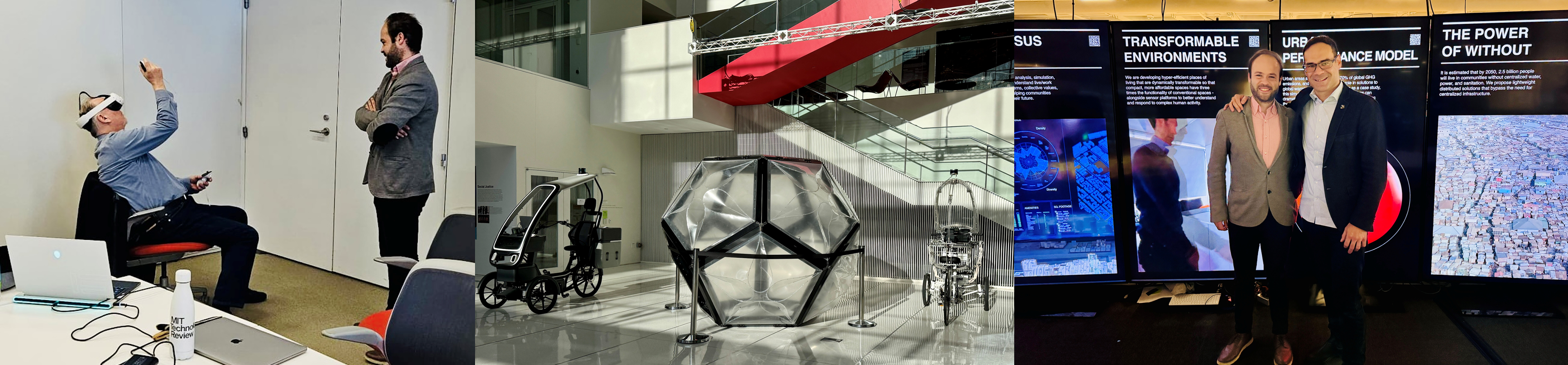
The immersive Future Cities workshop was hosted at the MIT City Science Lab as part of an ongoing collaboration within the MIT City Science Network. The purpose of the session was to explore how human centered research, future foresight, and emerging technologies can inform next generation urban and mobility systems. Bringing together MIT researchers, faculty, and lab leadership, the workshop created a shared space to exchange methodologies, examine real world use cases from the Future Mobility Design Lab, and collaboratively envision future scenarios for cities and communities.
Multi-level Prototyping Methods
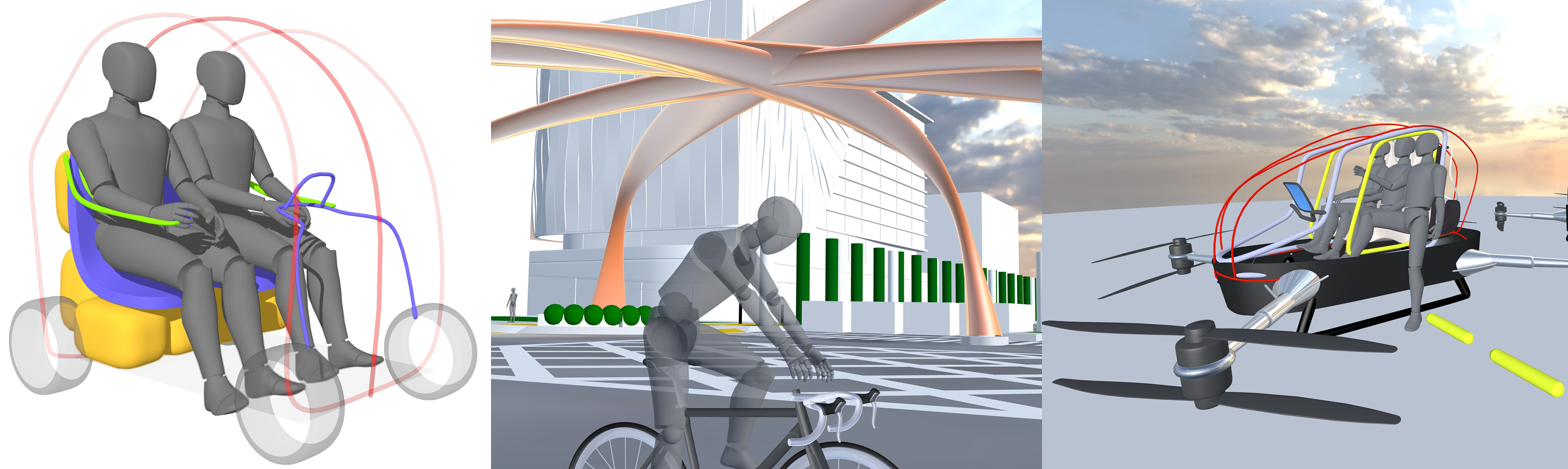
The core of the workshop centered on the application of proprietary multi level prototyping methodologies to enable real time co design and ideation. Participants engaged in hands on exploration using AR, VR, and XR tools to develop future urban infrastructure concepts and multimodal mobility solutions, including studies of ground based and aerial micromobility vehicle architectures alongside their integration into urban environments. This approach allowed participants to move fluidly between system level thinking and human scale experience, testing ideas across physical, digital, and immersive layers in a single collaborative workflow.
Conclusions and Impact
The workshop concluded with strong validation of the methodologies and tools demonstrated, confirming their value for both research and applied innovation contexts. Feedback from MIT City Science leadership and participants highlighted the scalability and adaptability of the approach, opening new opportunities to extend these methods across the global City Science Network. As a result, the workshop served as a catalyst for deeper collaboration, informing future research tracks and setting the stage for additional immersive, participatory workshops with partners worldwide.
3. A Window into Our Future Neighborhoods: A Participatory AR Experience
Context and Challenge
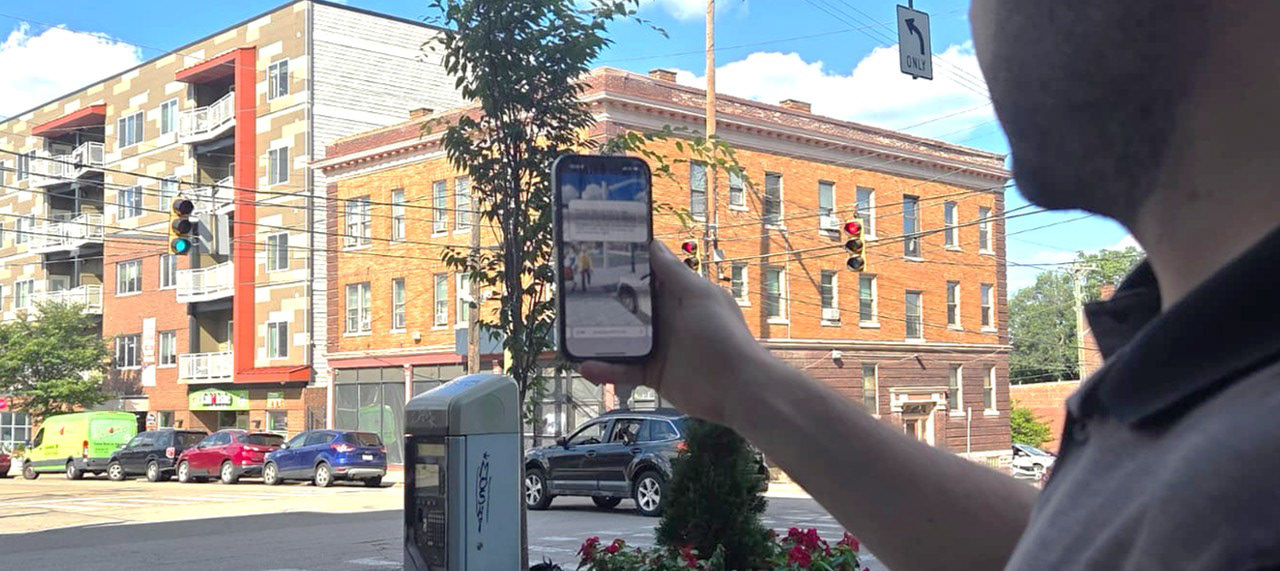
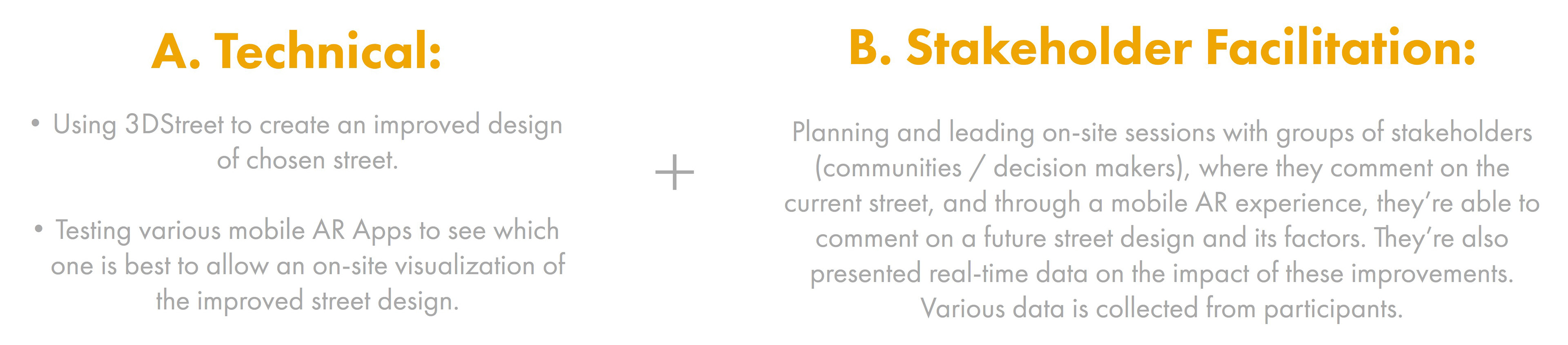
This project represents a major collaboration between the Future Mobility Design Lab, the MIT Media Lab, and 3DStreet, with local implementation support from the City of Cincinnati. The goal was to develop and validate a scalable, technology enabled and participatory methodology that allows communities and decision makers to better understand, evaluate, and co design future streets and neighborhoods. The project focused on lowering barriers to participation by combining mobile augmented reality, data driven design, and structured facilitation, enabling stakeholders to engage directly with future scenarios on site and in context. The two main components were:
Phase 1, Technology Review and Site Selection
The first phase focused on establishing a strong technical and methodological foundation. This included a state of the art review of existing mobile AR applications, assessing their capabilities, limitations, accessibility, and strategic value for participatory urban planning. A comparative framework was developed to evaluate each platform based on criteria such as usability, scalability, data integration, device compatibility, and suitability for community engagement. In parallel, a real world location in Cincinnati was selected to serve as the testbed for the methodology, ensuring that the pilot would be grounded in an active urban context with real planning relevance.
The first phase focused on establishing a strong technical and methodological foundation. This included a state of the art review of existing mobile AR applications, assessing their capabilities, limitations, accessibility, and strategic value for participatory urban planning. A comparative framework was developed to evaluate each platform based on criteria such as usability, scalability, data integration, device compatibility, and suitability for community engagement. In parallel, a real world location in Cincinnati was selected to serve as the testbed for the methodology, ensuring that the pilot would be grounded in an active urban context with real planning relevance.

State-of-the-art Mobile AR App secondary research sample & Comparative framework Analysis
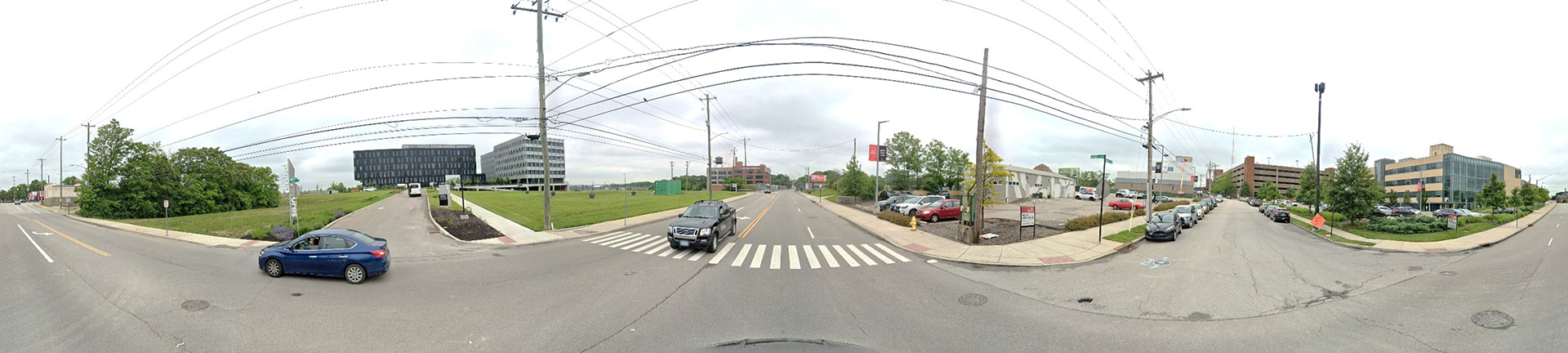
Site location outside UC Digital Futures Building
Phase 2, Technical Development and Pilot Preparation
The second phase centered on preparing the technical assets and participatory materials required for the pilot. This included selecting the final test location and generating accurate spatial data through scans and surveys. Using these inputs, the team developed a detailed 3D urban street model representing an improved future condition, incorporating enhanced multimodal mobility access, green and urban infrastructure, and mixed use development strategies. These designs were translated into a mobile AR experience using the selected toolchain, ensuring that participants could visualize and interact with future scenarios directly on site and at a human scale.
The second phase centered on preparing the technical assets and participatory materials required for the pilot. This included selecting the final test location and generating accurate spatial data through scans and surveys. Using these inputs, the team developed a detailed 3D urban street model representing an improved future condition, incorporating enhanced multimodal mobility access, green and urban infrastructure, and mixed use development strategies. These designs were translated into a mobile AR experience using the selected toolchain, ensuring that participants could visualize and interact with future scenarios directly on site and at a human scale.
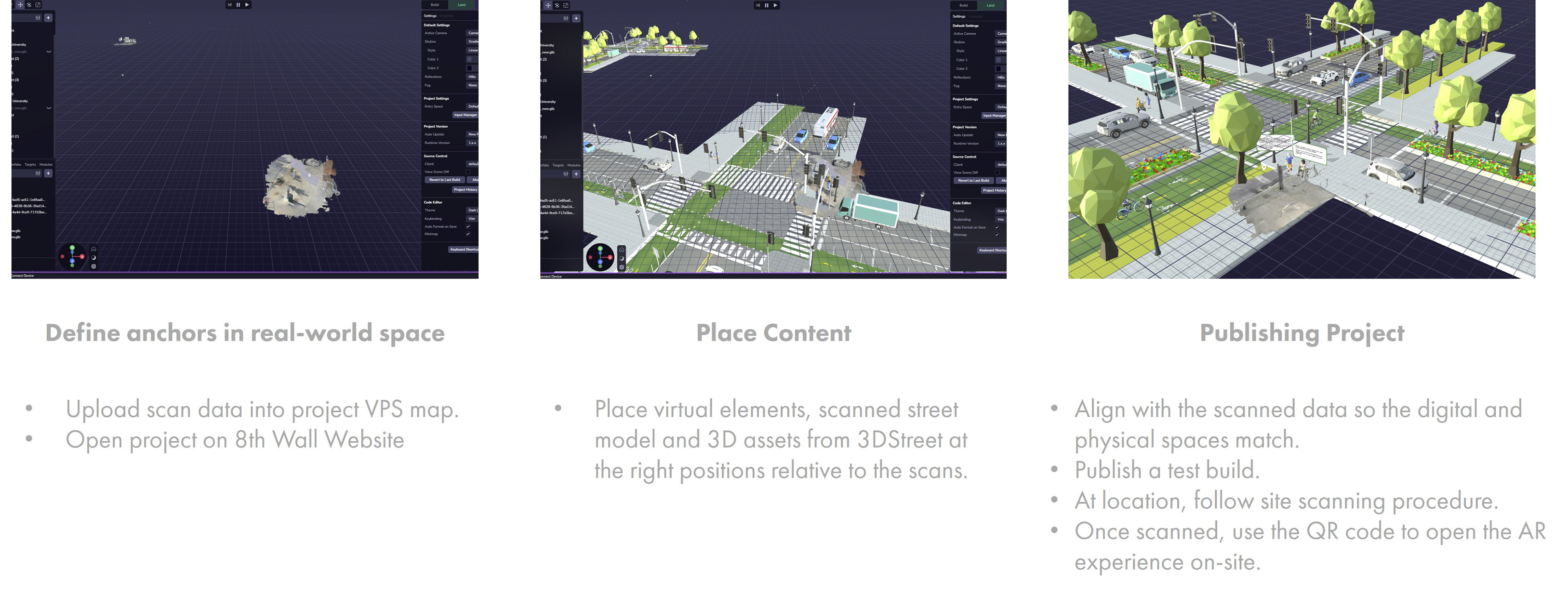
3D Street design development
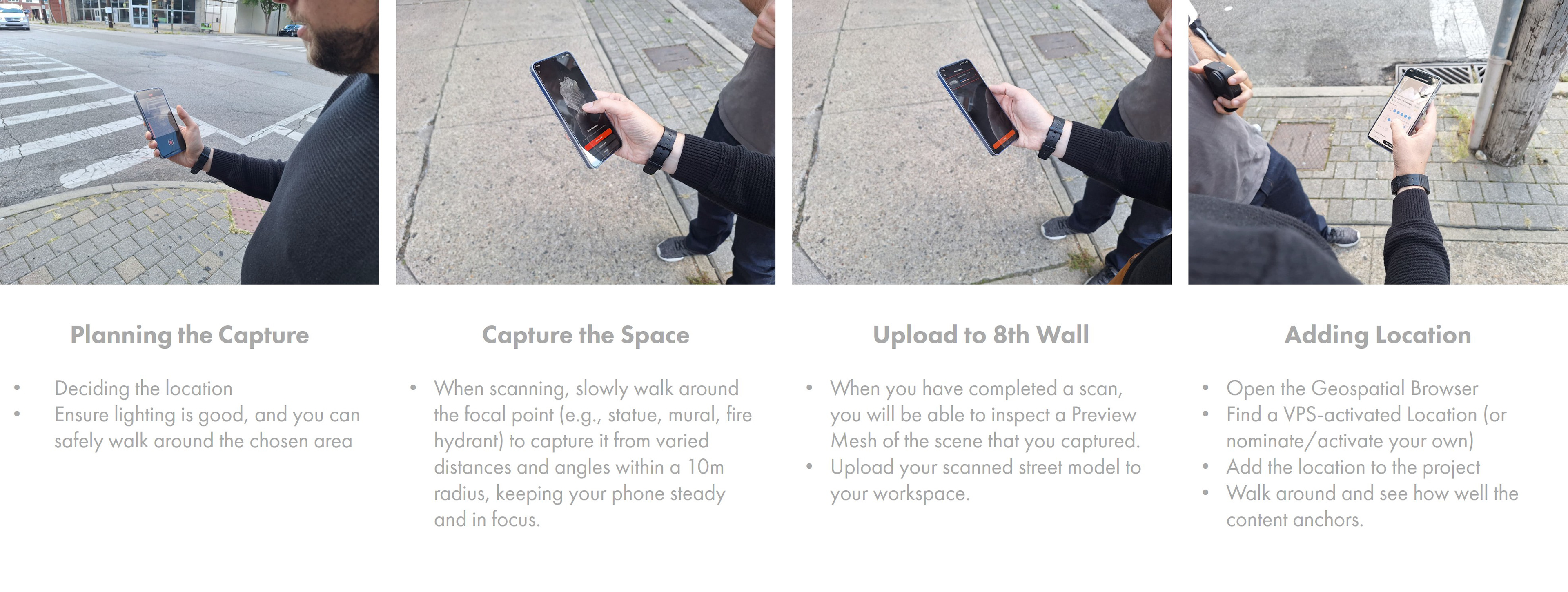
On-site preparation and scanning
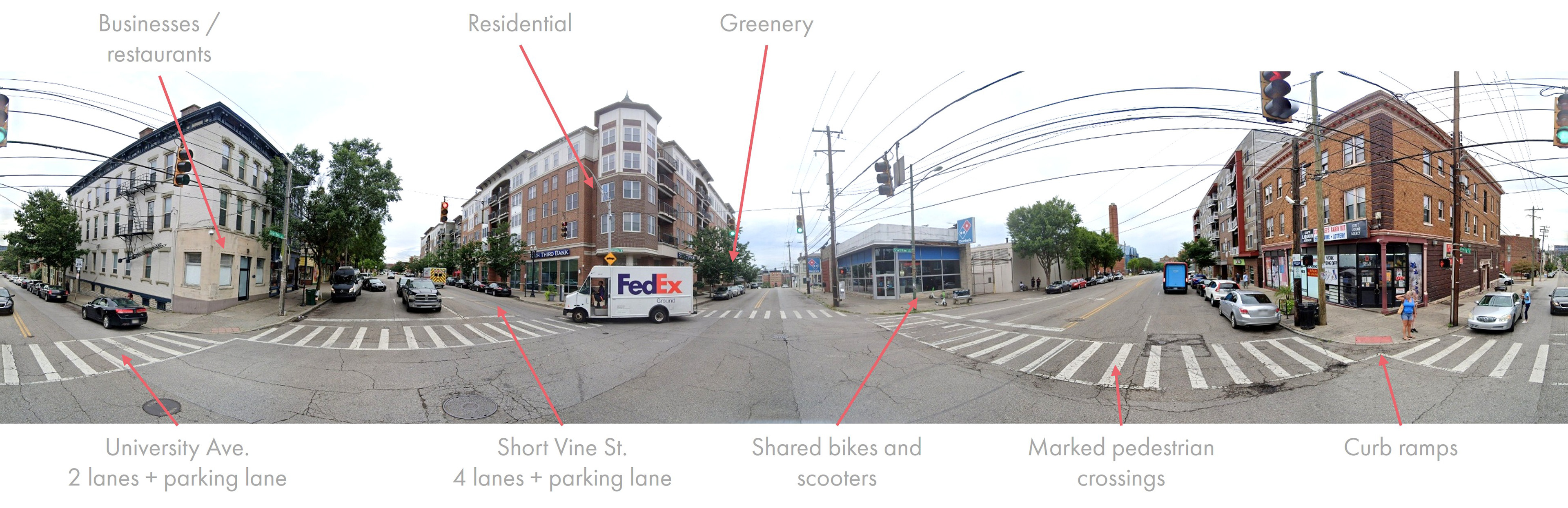
Final Test location
Phase 3, On Site Participatory Facilitation
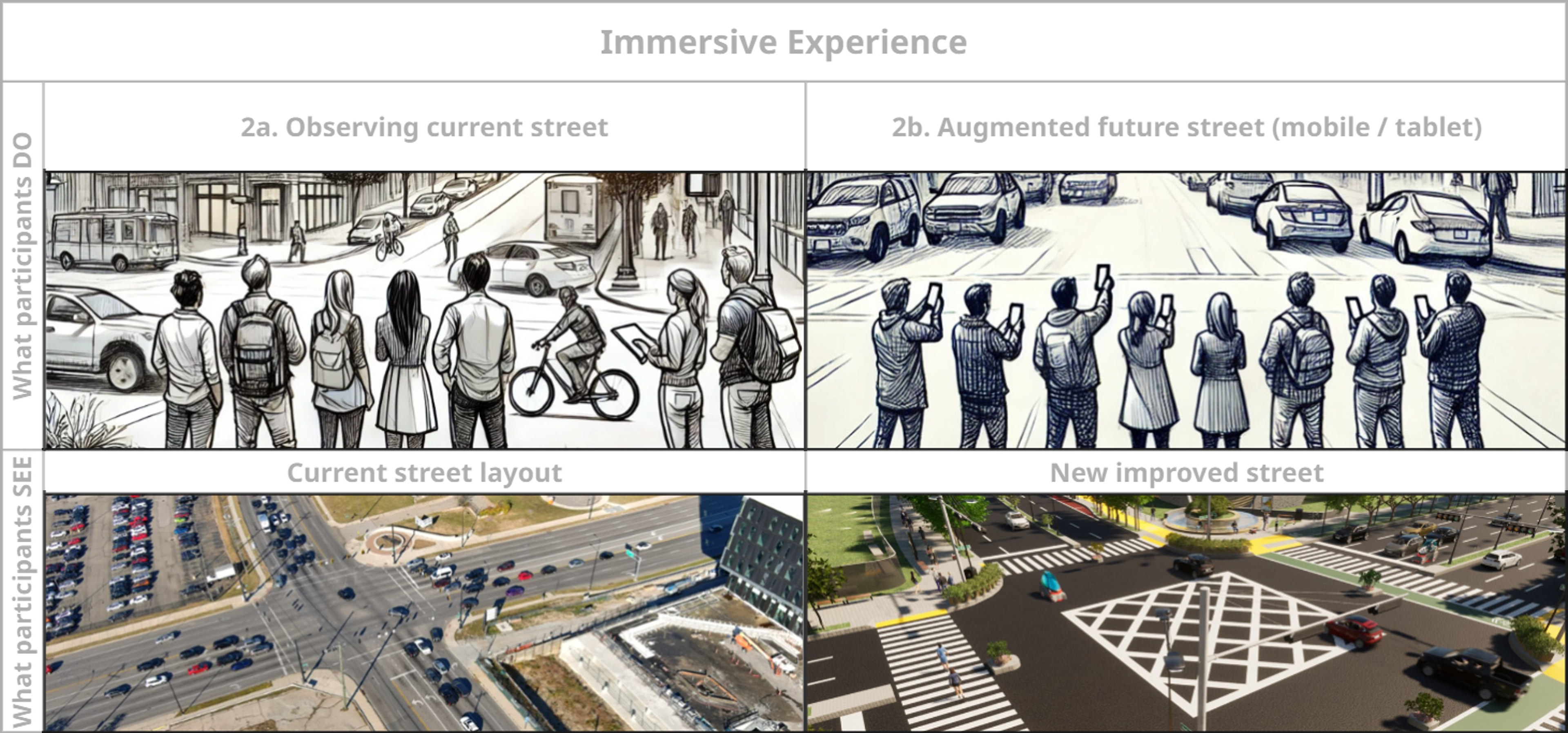
The third phase consisted of the live, on site participatory session where all methodological components were tested together. Community members, stakeholders, and decision makers were guided through a structured facilitation process that combined storytelling, AR visualization, and mixed methods data collection. Participants engaged with both the current and proposed future street conditions, providing qualitative feedback, reactions, and insights informed by their lived experience. This phase also assessed the effectiveness of the tools, facilitation structure, and data collection approach, identifying strengths, gaps, and opportunities for refinement.
The third phase consisted of the live, on site participatory session where all methodological components were tested together. Community members, stakeholders, and decision makers were guided through a structured facilitation process that combined storytelling, AR visualization, and mixed methods data collection. Participants engaged with both the current and proposed future street conditions, providing qualitative feedback, reactions, and insights informed by their lived experience. This phase also assessed the effectiveness of the tools, facilitation structure, and data collection approach, identifying strengths, gaps, and opportunities for refinement.
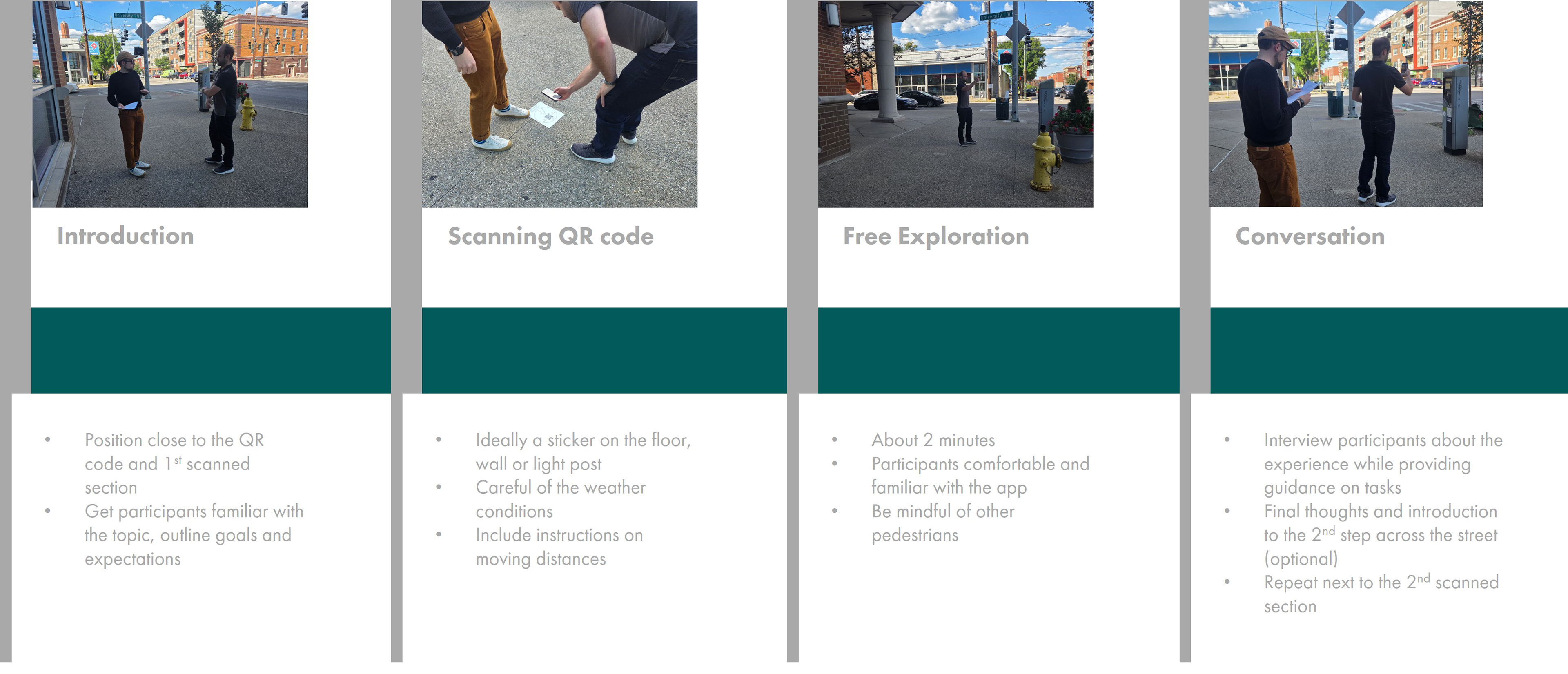
Final workshop framework
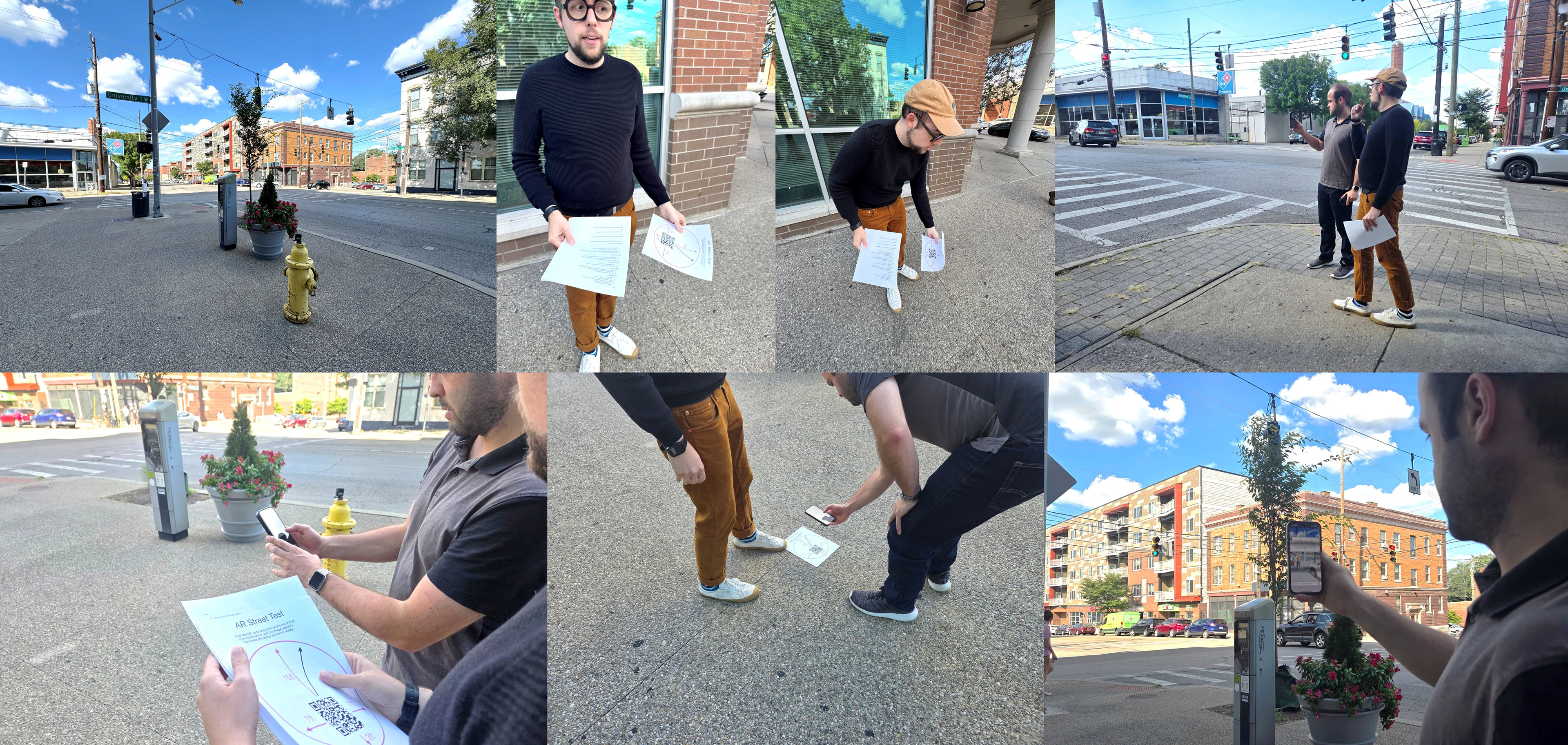
Final simulation
Final simulation 360 video recordings
Conclusions and Next Steps
The project successfully demonstrated the potential of mobile AR as a powerful participation and decision making tool for urban planning. By integrating accessible technology with human centered facilitation, the methodology improved understanding, engagement, and the quality of feedback compared to traditional approaches. The outcomes validated the technical pipeline and participatory framework, positioning the methodology for further pilots and broader adoption. Interest from cities in the U.S. and governments in countries such as Chile and Colombia is already shaping next steps, which include expanded pilots, additional funding pathways, academic publications, and the development of a scalable toolkit to support community centered, future ready urban governance.
The project successfully demonstrated the potential of mobile AR as a powerful participation and decision making tool for urban planning. By integrating accessible technology with human centered facilitation, the methodology improved understanding, engagement, and the quality of feedback compared to traditional approaches. The outcomes validated the technical pipeline and participatory framework, positioning the methodology for further pilots and broader adoption. Interest from cities in the U.S. and governments in countries such as Chile and Colombia is already shaping next steps, which include expanded pilots, additional funding pathways, academic publications, and the development of a scalable toolkit to support community centered, future ready urban governance.
4. Future of Mobility and A.I, Hyundai North America
Context and Challenge
This sponsored and NDA protected collaboration brought together the MIT City Science Lab, Hyundai North America through Hyundai America Technical Center Incorporated, and the University of Cincinnati to explore how artificial intelligence and emerging mobility technologies may reshape cities in the coming decades. The goal of the project was to expose multidisciplinary student teams to real world industry challenges while generating forward looking visions that could inform future mobility strategy. Undergraduate and graduate students from industrial and graphic design, aerospace engineering, computer science, and business participated in a structured design challenge delivered in 3 stages, 2 virtual sessions followed by an intensive 3 day in person sprint in Cincinnati.
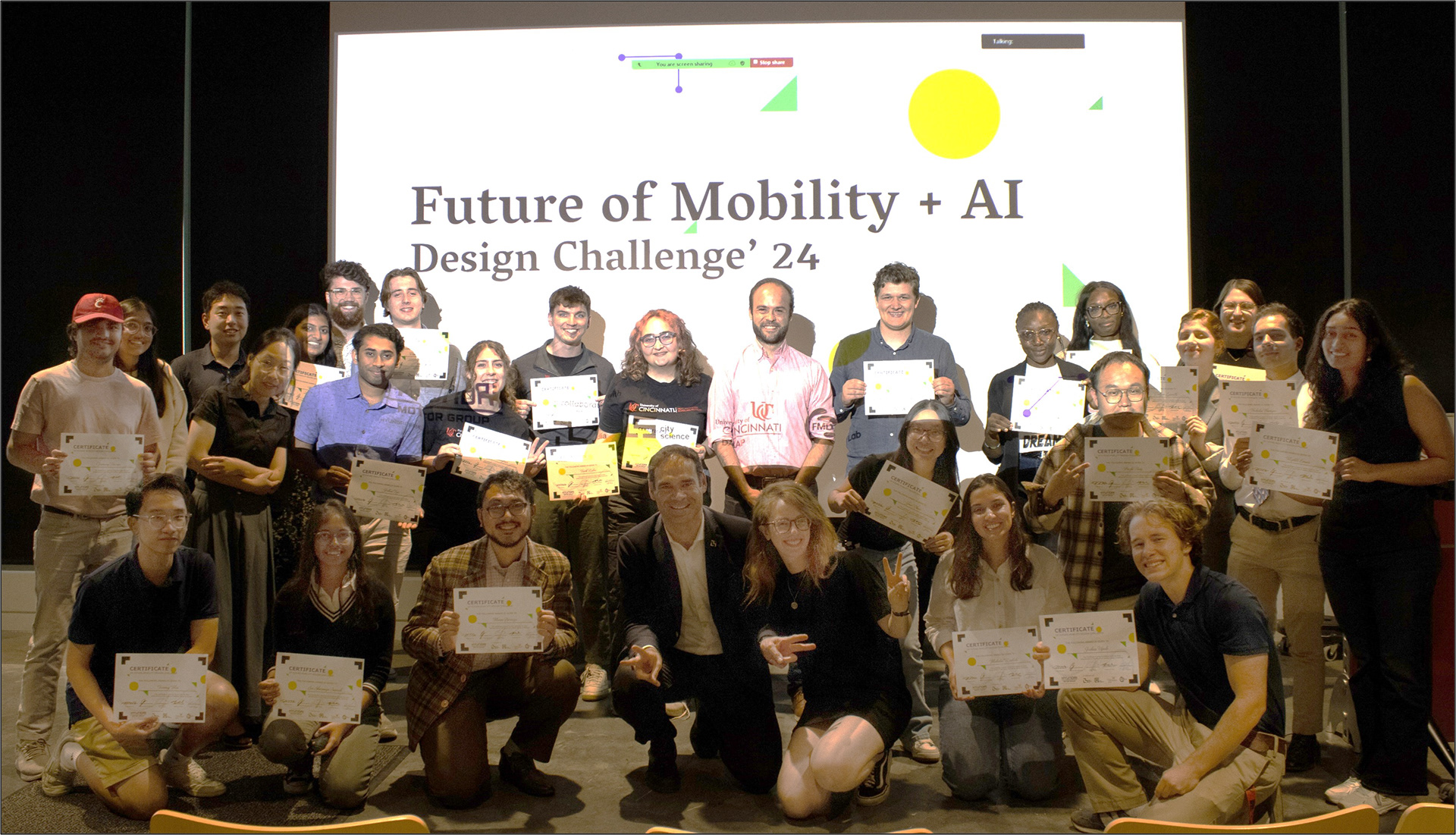
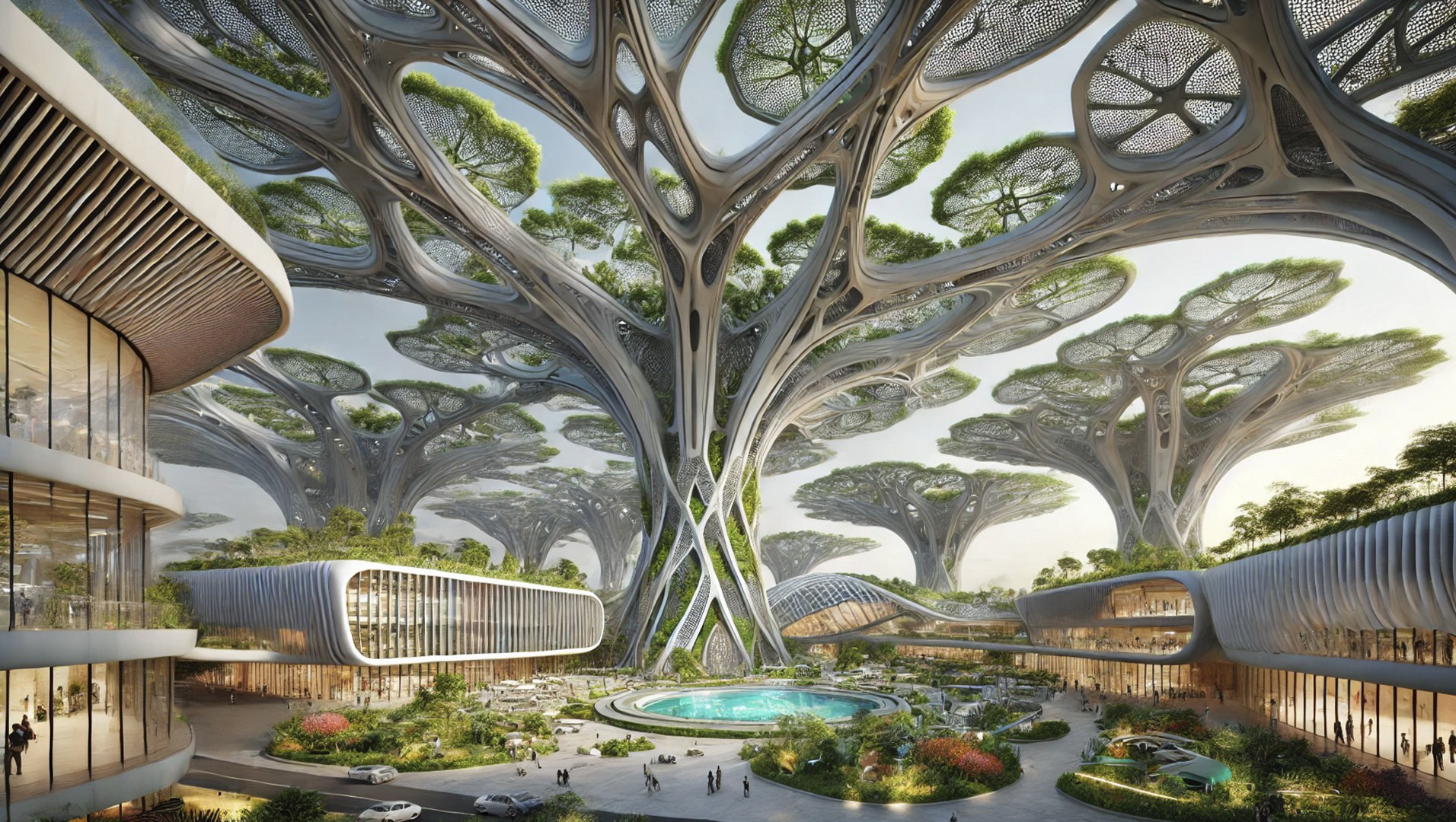
The first 2 virtual sessions established a shared foundation and future oriented mindset. The opening session introduced the project scope and partners, followed by a “looking into the past” lecture examining how Cincinnati has evolved over the last 100 plus years across infrastructure, industry, and urban form. This was followed by an analysis of the city’s present conditions, including mobility systems and socio economic paradigms. The second session opened a “window into the future of Cincinnati,” exposing participants to 2040 megatrends such as A.I, autonomy, and the shared economy, and their potential impacts on urban life. Students then formed teams and began early ideation through STEEP analysis and mood board creation, defining initial directions for future visions.
The core of the collaboration was the in person 3-day design challenge hosted in Cincinnati, with active participation from MIT and HATCI. By this stage, teams had consolidated a clear design brief and used the sprint to translate research and foresight into compelling future visions for the city. Using human centered design, systems thinking, and rapid prototyping, each group developed integrated concepts addressing mobility, urban experience, and technological innovation. The challenge culminated in formal presentations where teams showcased their “window into the future of Cincinnati” and received direct feedback from industry and academic sponsors.
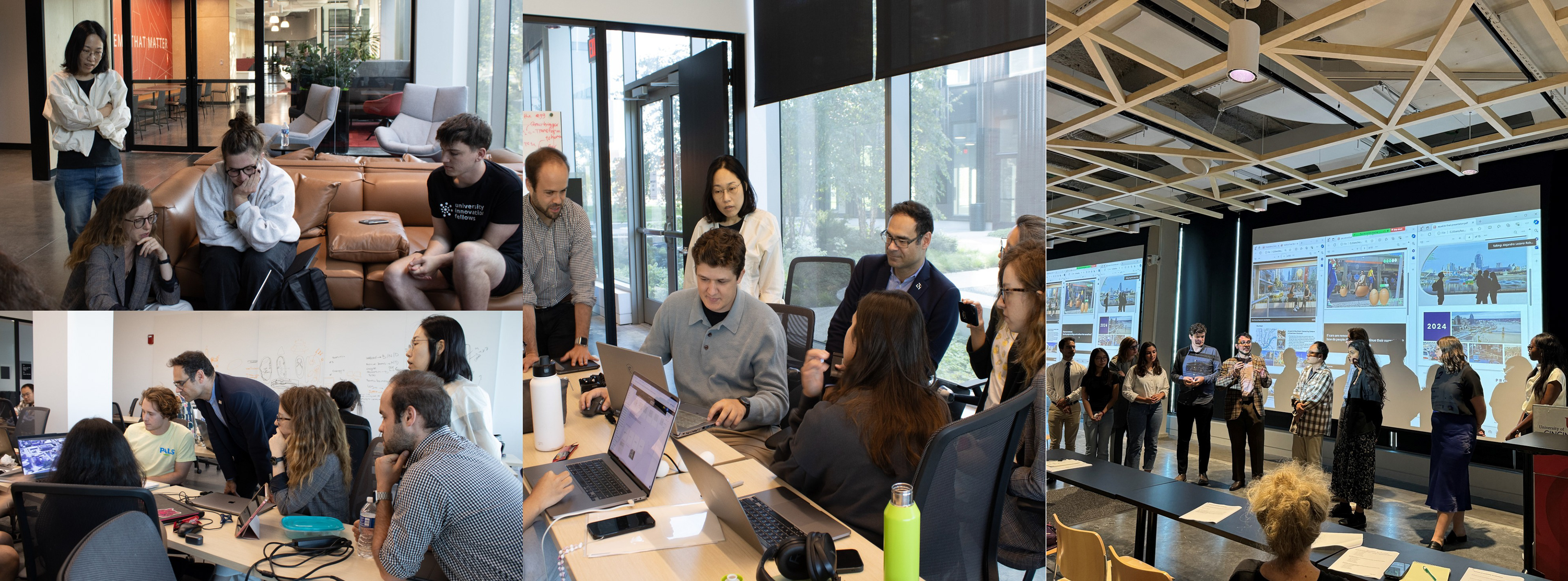
Captions from 3-day Design Challenge
Conclusions and Next Steps
The outcomes of the challenge demonstrated the value of combining strategic foresight, design thinking, and industry engagement in an academic setting. Final visions were submitted and presented at SXSW 2025, extending the reach of the work beyond the university. HATCI is currently leveraging these future visions as inspiration and reference material for its new design studio in California, while partners continue evaluating follow up research grants and future collaborations that build on the momentum of this initiative.
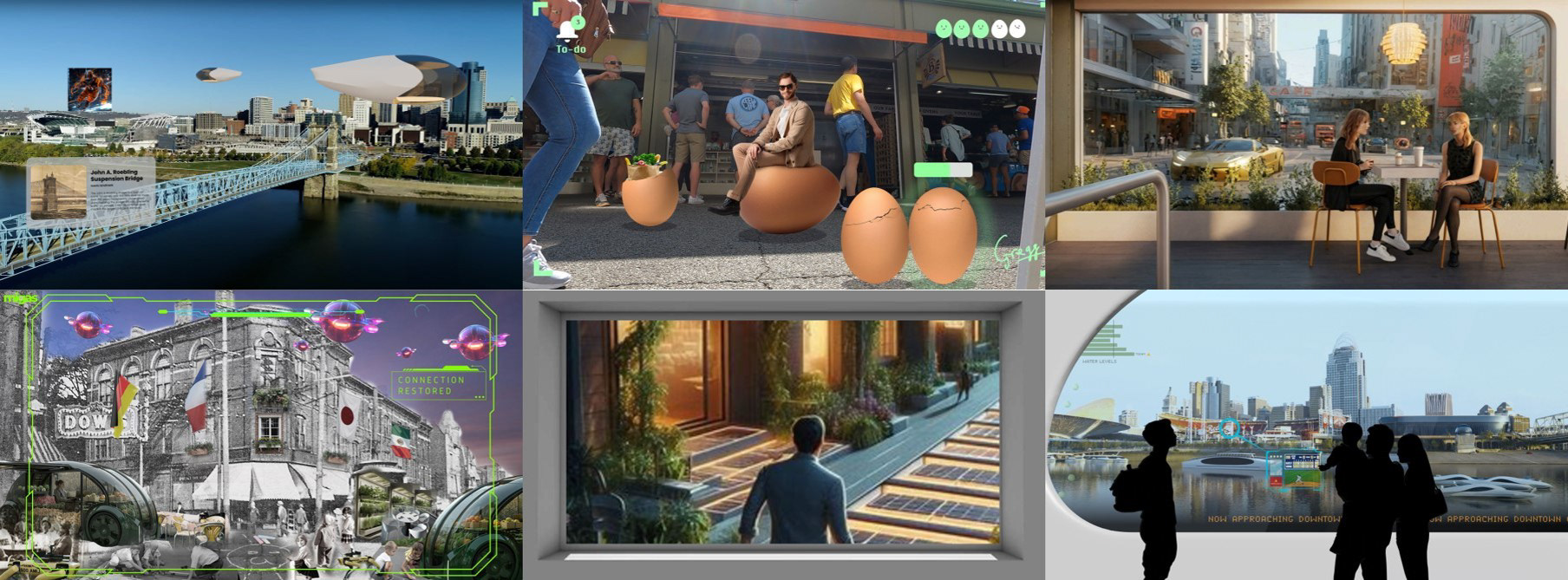
Final "Windows into the Future of Cincinnati"
Interested in more information?
This work is part of an ongoing partnership with the MIT City Science Network, spanning a series of collaborations across global industries, including mobility innovation with Hyundai, government organizations in countries such as Chile, and local city governments like Cincinnati. Due to the nature of these engagements, much of the data, insights, and project-specific outcomes are protected under non-disclosure agreements. However, several final outcomes, methodologies, and core processes are publicly shareable. I would be glad to provide additional context and discuss these collaborations, the frameworks applied, and their broader implications upon request.
Thank you for getting to the end!