
Hyundai North America
Context and Challenge
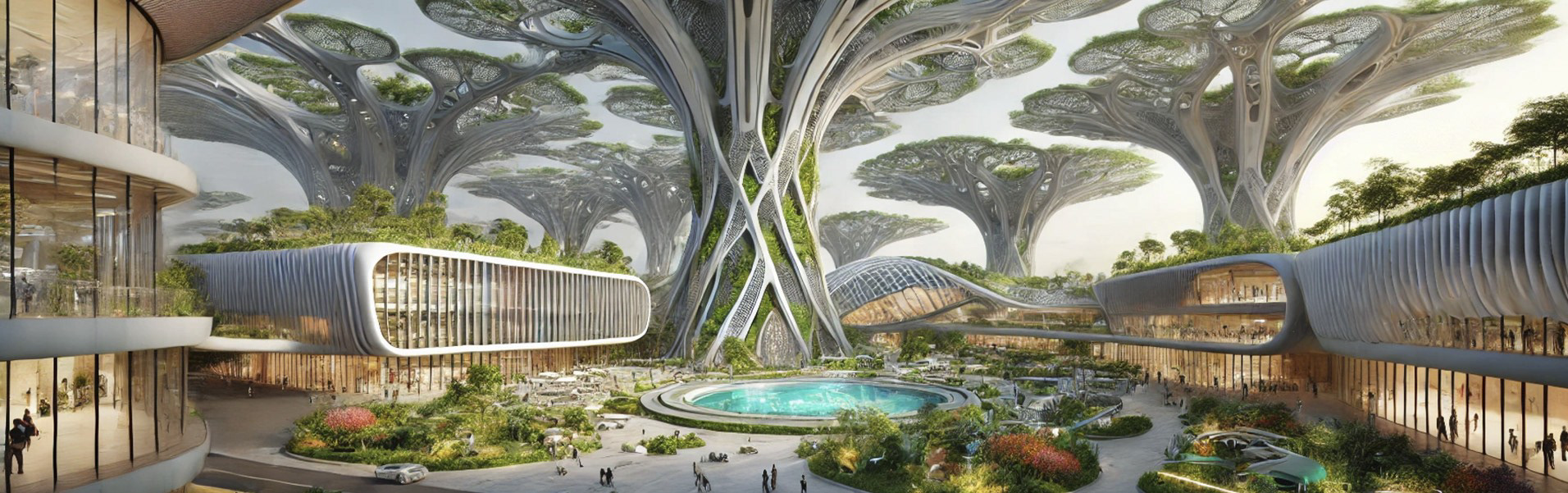
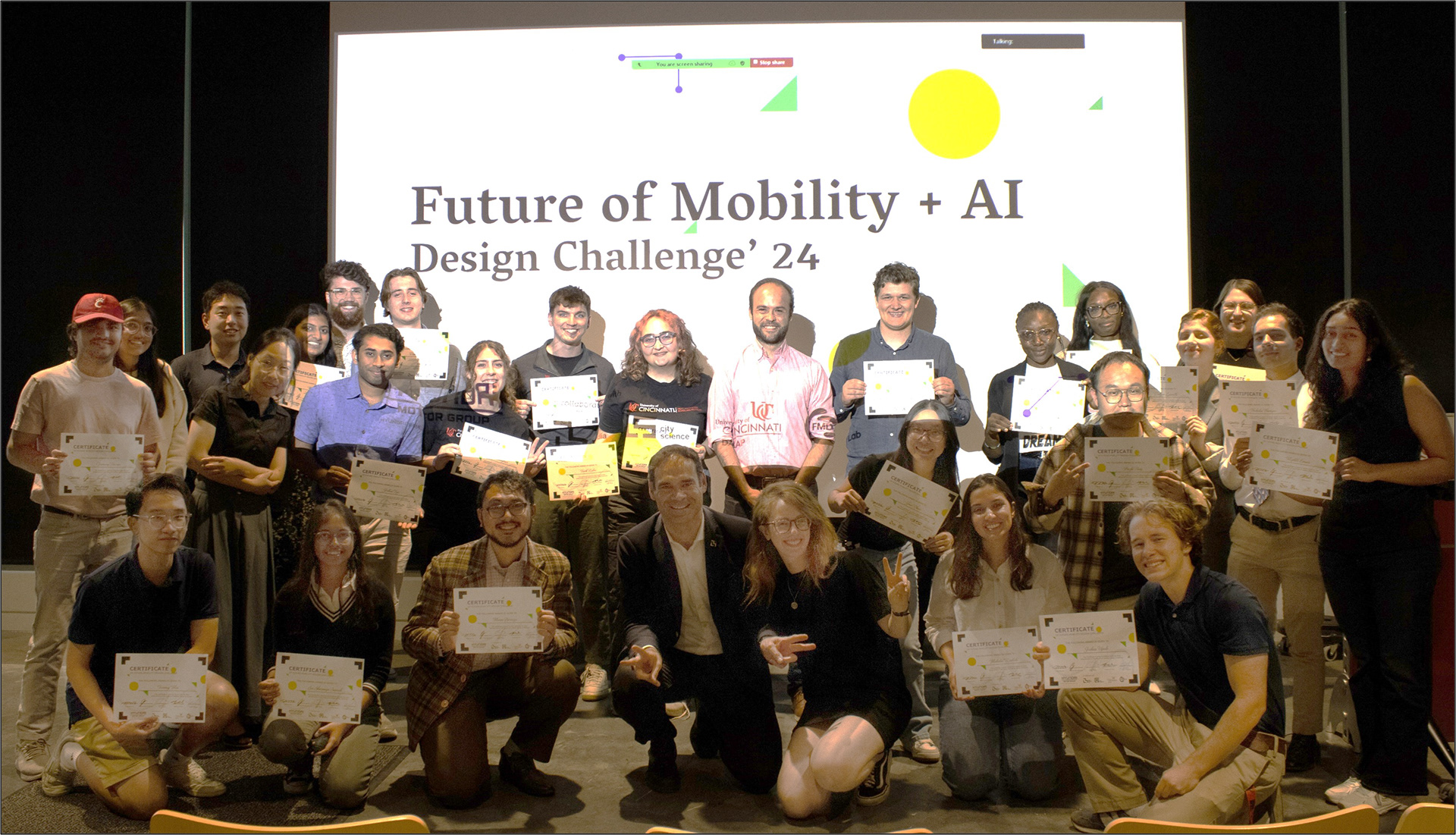
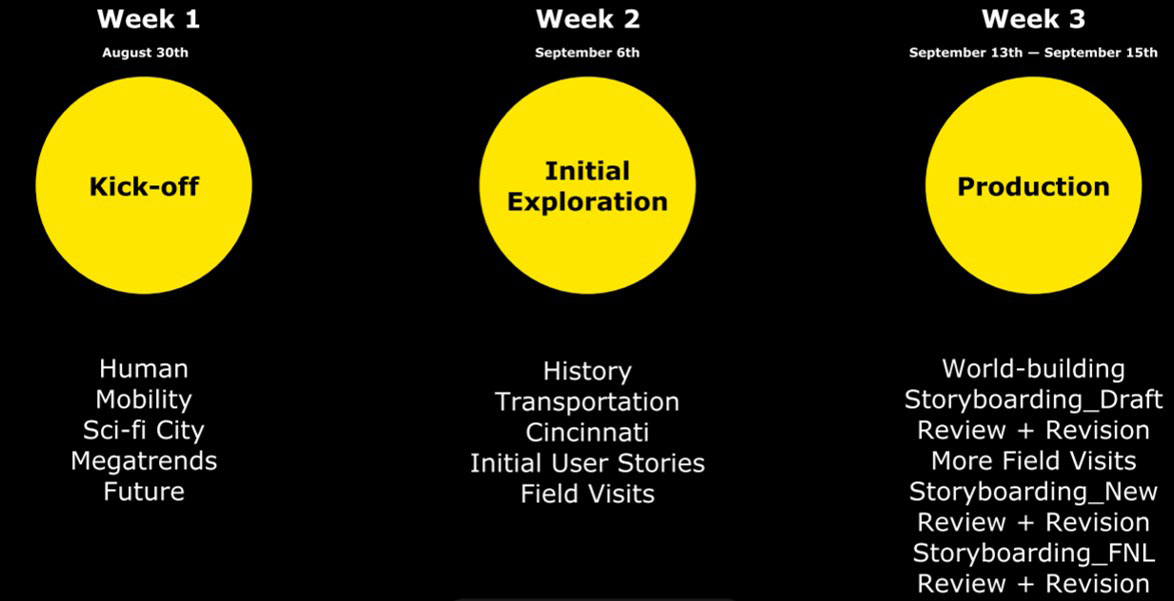
This sponsored and NDA protected collaboration brought together the MIT City Science Lab, Hyundai North America through Hyundai America Technical Center Incorporated, and the University of Cincinnati to explore how artificial intelligence and emerging mobility technologies may reshape cities in the coming decades. The goal of the project was to expose multidisciplinary student teams to real world industry challenges while generating forward looking visions that could inform future mobility strategy. Undergraduate and graduate students from industrial and graphic design, aerospace engineering, computer science, and business participated in a structured design challenge delivered in 3 stages, 2 virtual sessions followed by an intensive 3 day in person sprint in Cincinnati.
Design Challenge Framework
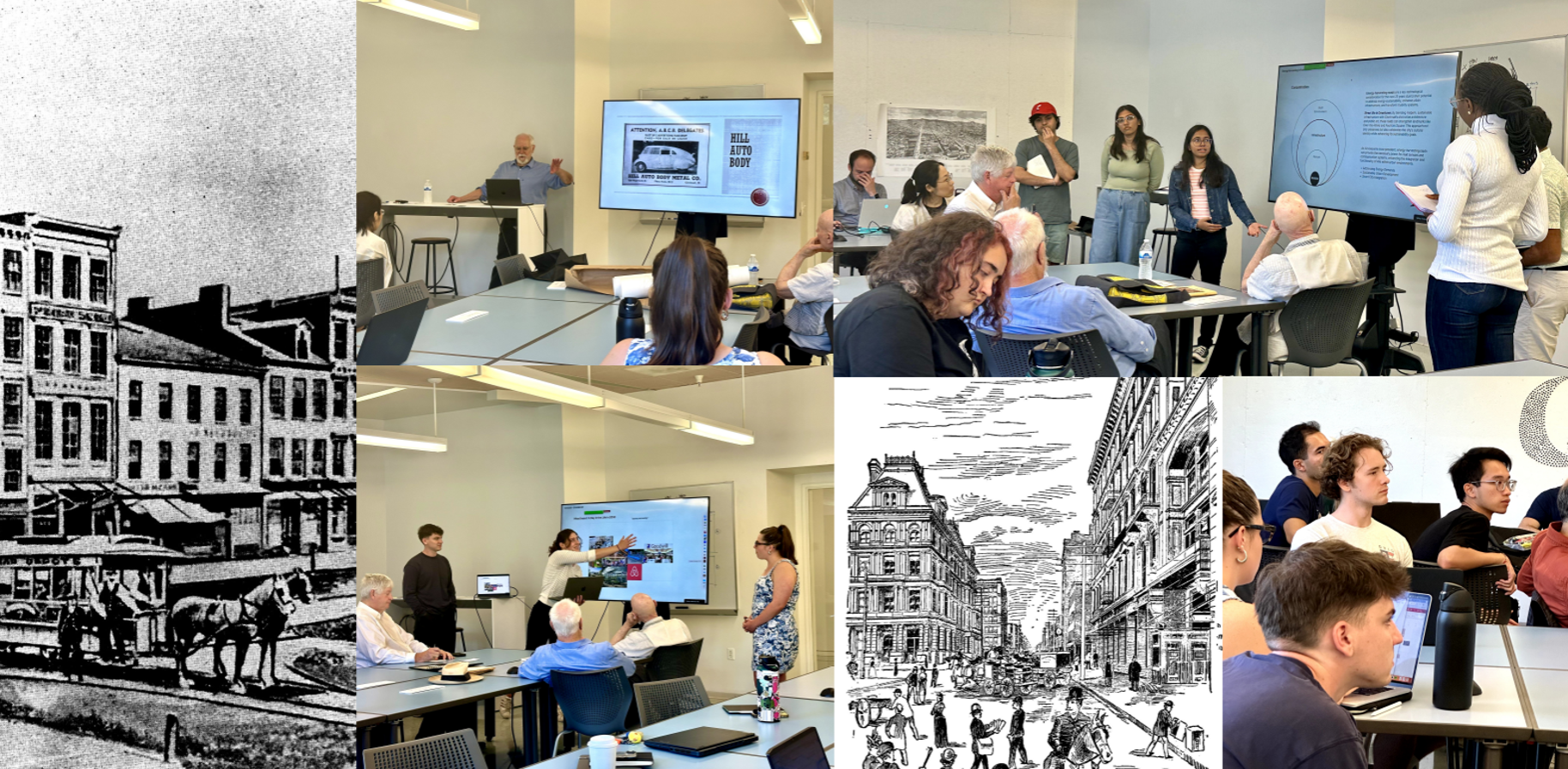
The first 2 virtual sessions established a shared foundation and future oriented mindset. The opening session introduced the project scope and partners, followed by a “looking into the past” lecture examining how Cincinnati has evolved over the last 100 plus years across infrastructure, industry, and urban form. This was followed by an analysis of the city’s present conditions, including mobility systems and socio economic paradigms. The second session opened a “window into the future of Cincinnati,” exposing participants to 2040 megatrends such as A.I, autonomy, and the shared economy, and their potential impacts on urban life. Students then formed teams and began early ideation through STEEP analysis and mood board creation, defining initial directions for future visions.
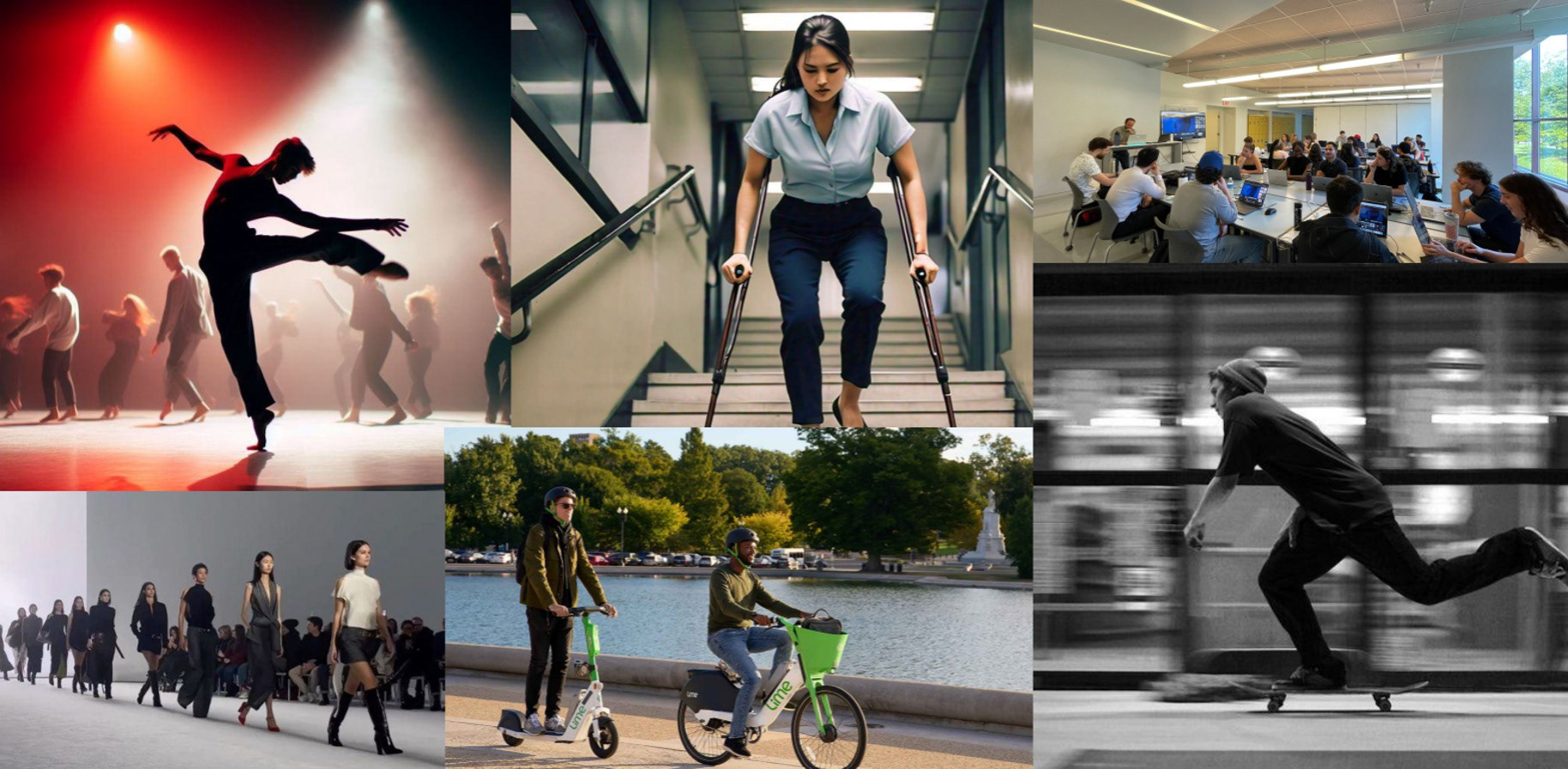
What is mobility?
A thematic and abstract exploration of mobility: the way people move, the way objects move, the way systems & cities move, the way society moves.
The history of transportation in Cincinnati
City historians came to give an overview of the transportation systems and infrastructure of Cincinnati in the past 100 years.
The Design Challenge
The core of the collaboration was the in person 3-day design challenge hosted in Cincinnati, with active participation from MIT and HATCI. By this stage, teams had consolidated a clear design brief and used the sprint to translate research and foresight into compelling future visions for the city. Using human centered design, systems thinking, and rapid prototyping, each group developed integrated concepts addressing mobility, urban experience, and technological innovation. The challenge culminated in formal presentations where teams showcased their “window into the future of Cincinnati” and received direct feedback from industry and academic sponsors.
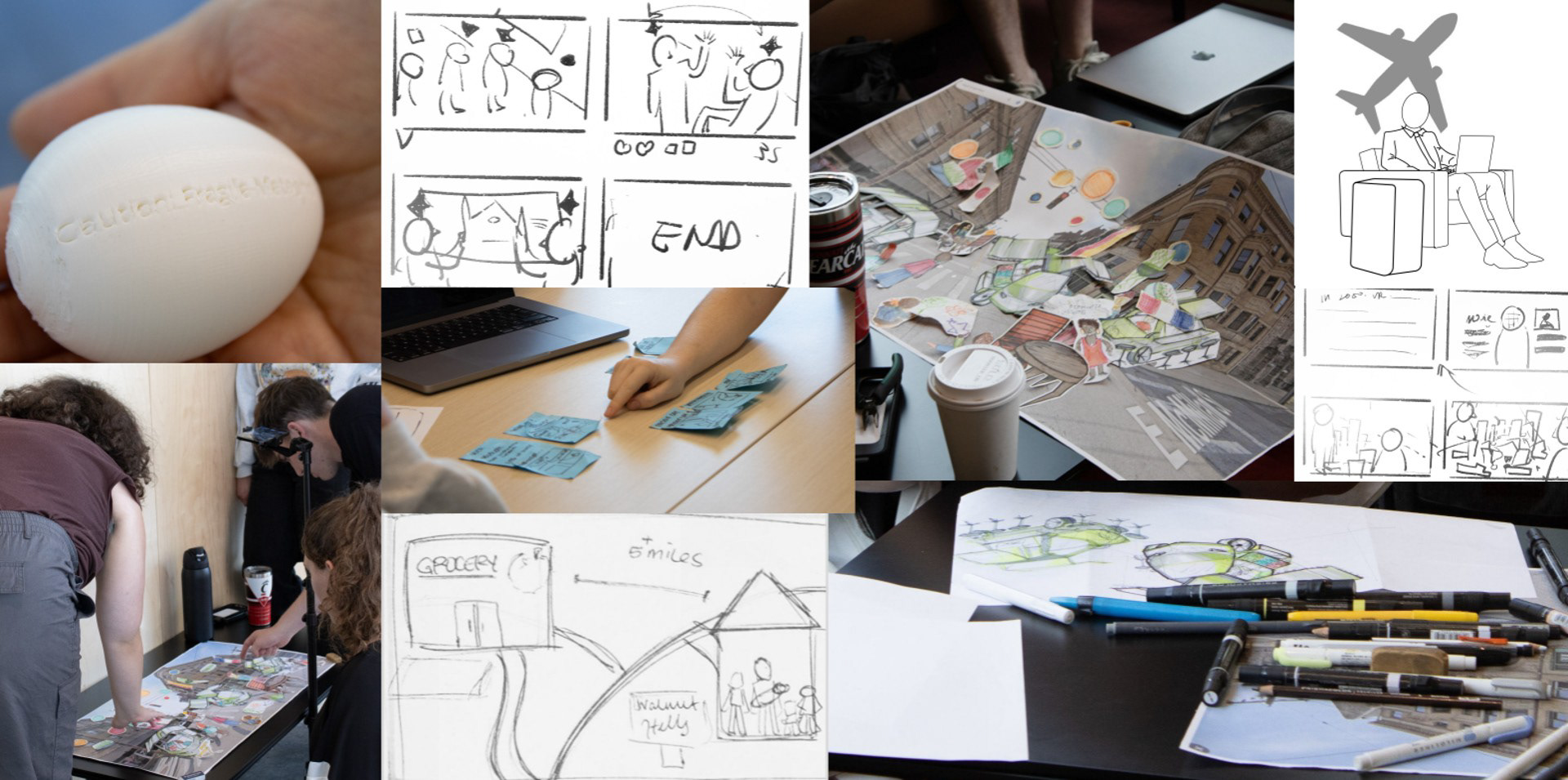
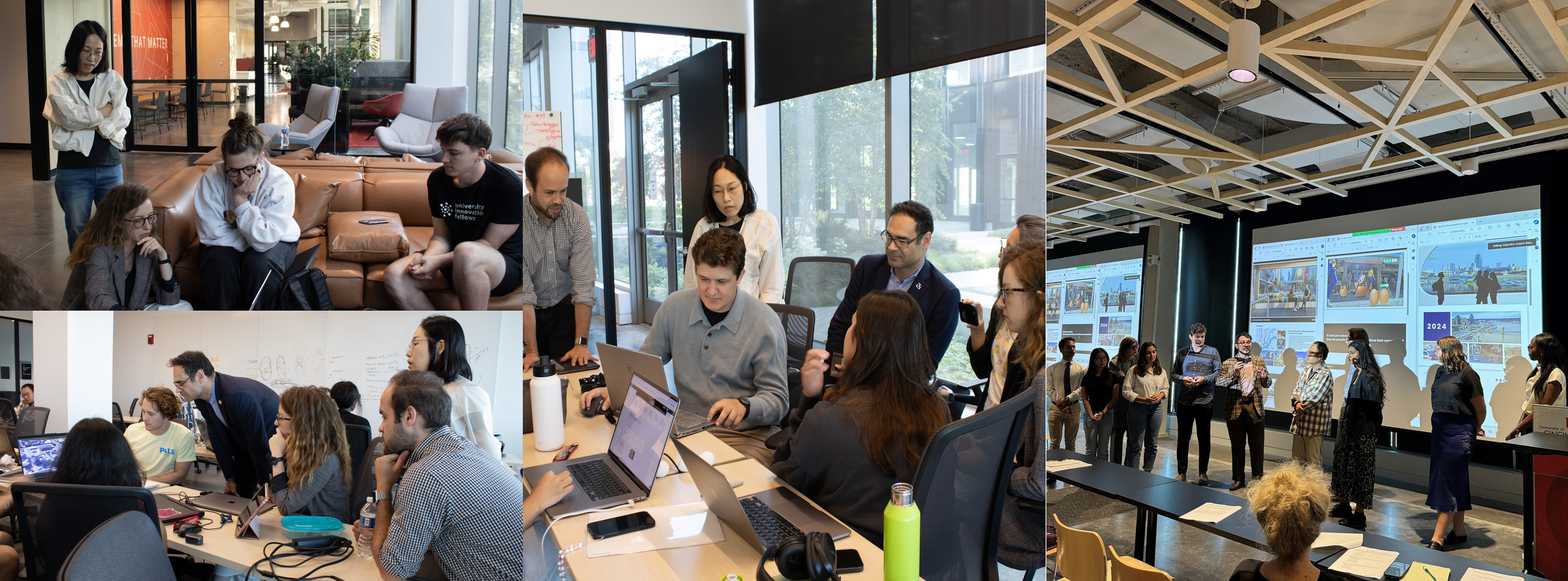
Captions from 3-day Design Challenge
Conclusions and Next Steps
The outcomes of the challenge demonstrated the value of combining strategic foresight, design thinking, and industry engagement in an academic setting. Final visions were submitted and presented at SXSW 2025, extending the reach of the work beyond the university. HATCI is currently leveraging these future visions as inspiration and reference material for its new design studio in California, while partners continue evaluating follow up research grants and future collaborations that build on the momentum of this initiative.
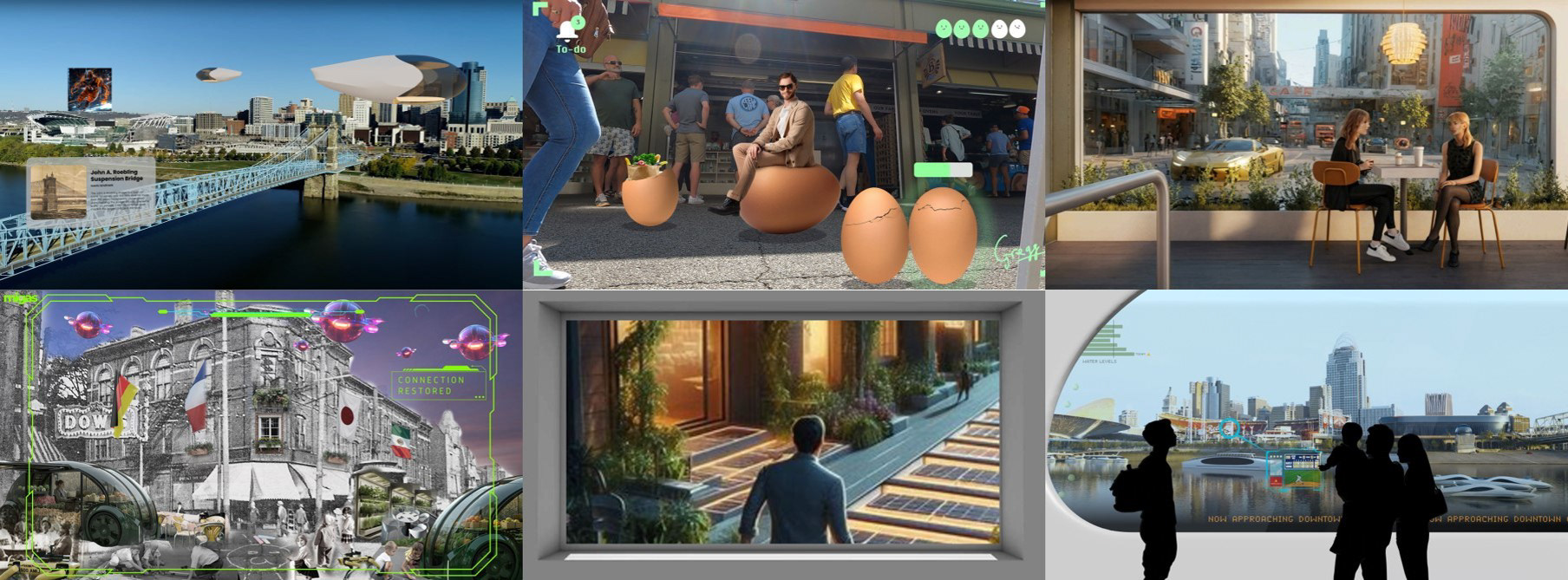
Final "Windows into the Future of Cincinnati"