
A Participatory Experience

Leading a large-scale UX research, design thinking, and strategic foresight engagement with the City of Cincinnati, combining government co-design workshops, immersive Digital Twin tools, and AI enabled qualitative analysis to translate stakeholder expertise into actionable insights now informing the city’s future planning, budgeting, and long-term investment decisions.
Timeline: 2023-2025.
Industry: City Government branches.
Roles: Project Lead and Facilitator.
Team included 4 city planners who advised the intersection plan, 5 multidisciplinary graduate students, and 50+ city government stakeholders from various branches.
Funding Amount: NDA protected
Results & Impact
• Led a 6-month engagement with the City of Cincinnati, working with planning and subject-matter experts to deliver foundational UX research and a future-ready strategic plan for the City's Innovation Corridor.
•Facilitated 4+ iterative co-design sessions with 10+ experts, using digital and VR tools, culminating in a 50+ stakeholder workshop where city leaders reviewed and validated a 10-year corridor plan. 3 additional workshops were conducted with 50+ local residents and community members, and the data collected was analyzed and included in the final report for the City of Cincinnati.
•Applied 10+ UX research methods and Generative AI to gather actionable insights across 10 key focus areas, supported by post-workshop surveys and interviews analyzed using AI enabled qualitative methods.
•Delivered a final strategic report with prioritized recommendations, cost-benefit considerations, and quality-of-life metrics, now informing the city’s Cincinnati 2030 Plan, follow-on community workshops, and new U.S. DOT grant pursuits.
•Focus: Reimagining Cincinnati’s Innovation Corridor for future access, mobility, and economic growth over a 10 to 20 year horizon using user-centered research to align city stakeholders around a shared, future-ready vision.
•Methods: 10+ UX research methods including multiple stakeholder co-design workshops, Generative AI, user journeys, service blueprints, Digital Twin–enabled AR/VR prototyping, mixed qualitative and quantitative research, and AI assisted qualitative analysis and dataset coding to translate insights into planning recommendations.
•Confidentiality: All data and outcomes are NDA protected. Frameworks and methodologies are proprietary and shareable upon request.
The Cincinnati Innovation Corridor
•Focused on Uptown Cincinnati, a high-impact district generating $20.1Billion in annual economic output and supporting 180,000+ jobs across universities, hospitals, research centers, and business districts.
•Addressed mobility and access challenges within an aging, car-oriented infrastructure that no longer matches the corridor’s scale or growth.
•Positioned the corridor as a real-world UX research test case to rethink mobility, access, and urban systems using participatory, technology-enabled methods.
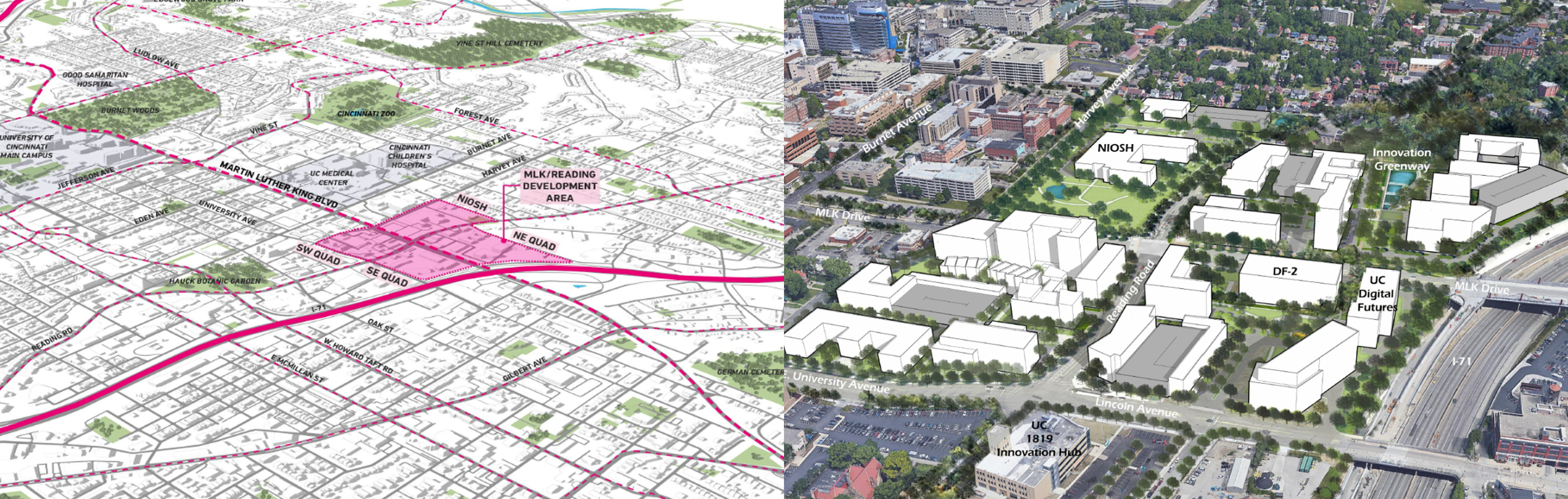
Innovation Corridor initial redevelopment plan
Co-design session with City Planners
•Led 4 co-design sessions with city planners and city experts to define the project scope, identify 10 key focus areas, and align on priorities for the Innovation Corridor.
•Used a step-by-step approach, starting with simple plans and visuals and moving to 3D and immersive views, to help teams clearly understand and discuss future options.
•Enabled planners to review, refine, and validate the corridor design before presenting it in a 50+ stakeholder workshop, supporting clearer decision making.

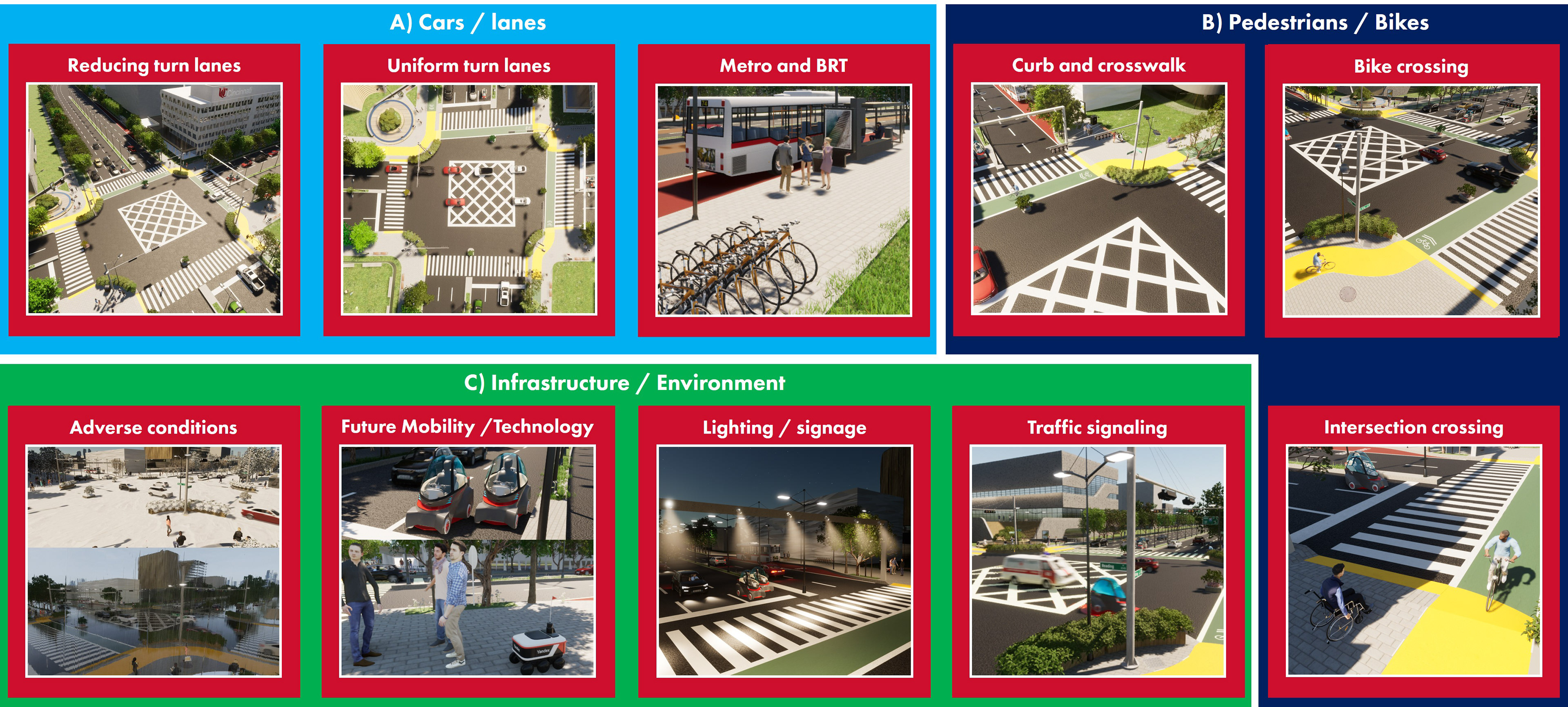
Workshop 10 Focus Areas
•Planning near / long-term solutions in 3 categories: a) cars/lanes, b) pedestrians/bikes, c) infrastructure/environment. Each had subcategories, totaling10 Focus Areas.
•Prompts: Who are the users/stakeholders involved? What are the key issues/barriers? What are we missing? How might technology help improve this?
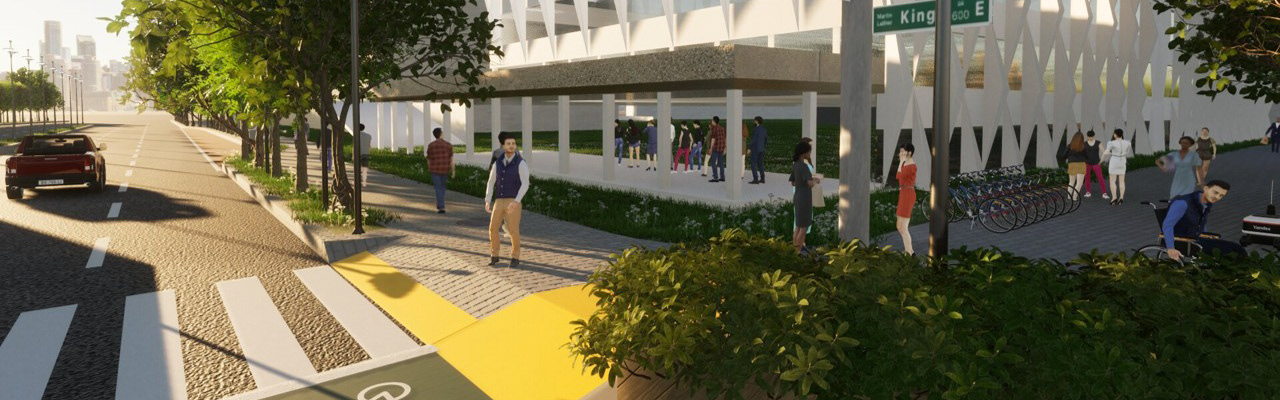
Innovation Corridor Digital Twin Concept
Final Digital Twin of the Innovation Corridor, prior to the workshop
City of Cincinnati government workshop
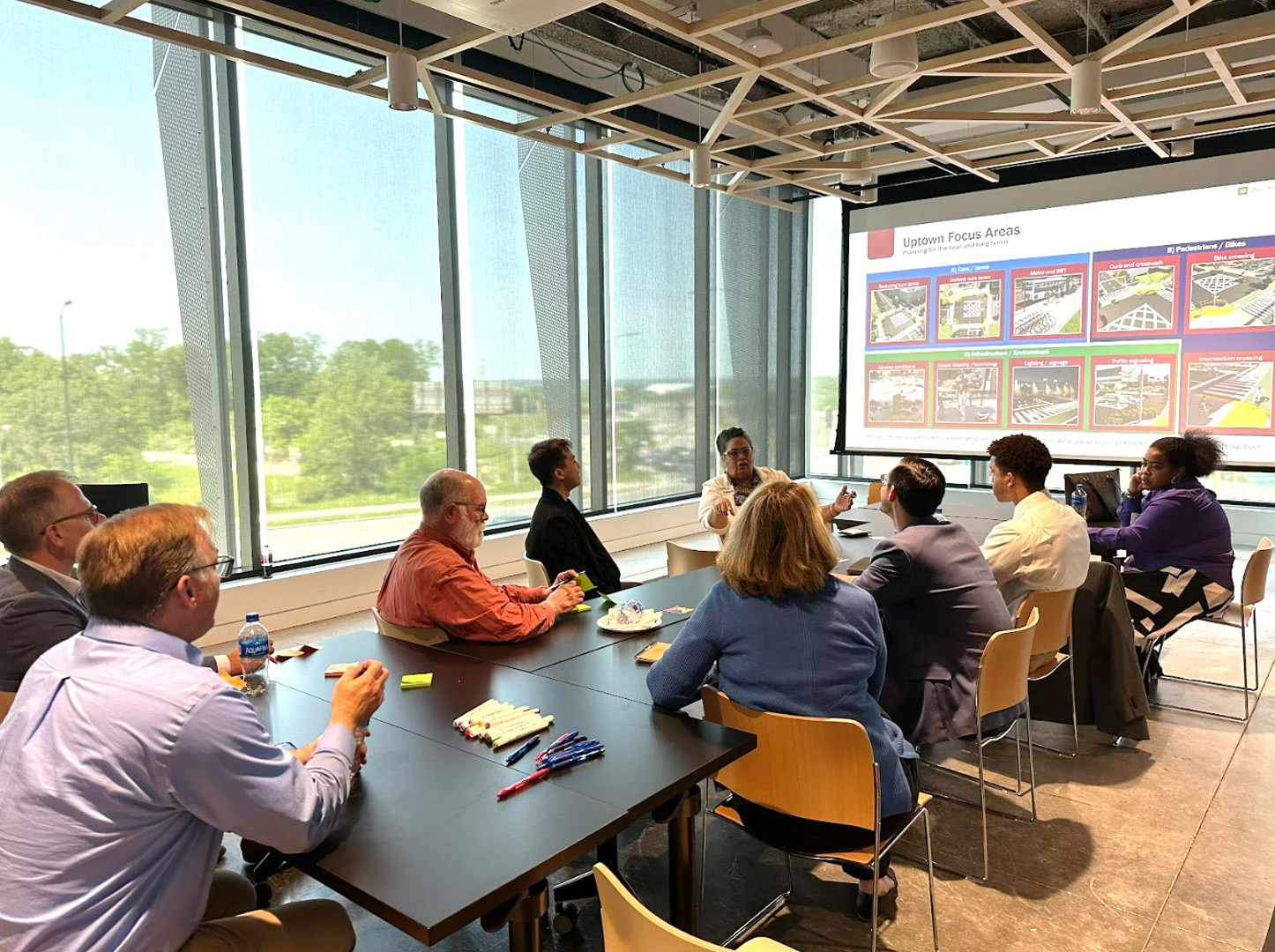
Photo of one of the workshop groups
•Led a 50+ stakeholder co-design workshop with city officials and agency leaders, generating structured qualitative insights across 10 key focus areas.
•Applied 10+ UX research methods, including journey mapping, immersive AR/VR scenarios, and facilitated co-design, to identify opportunity areas, and constraints.
•Delivered a consolidated impact report now informing budget planning, infrastructure priorities, and long-term investment decisions under NDA.
•Follow-on workshops with community members and partners expanded the dataset, strengthening the city’s inclusive, future-ready 2030 planning efforts.
Results
•Collected 150+ structured post-it notes (qualitative insights) across10 focus areas during the stakeholder workshop.
•Grouped inputs into 4 key themes and 16 priority clusters, identifying recurring barriers, opportunity areas, and implementation pathways.
•Synthesized findings into clear, decision-ready insights grounded in stakeholder perspectives on users, constraints, trade-offs, and feasibility.
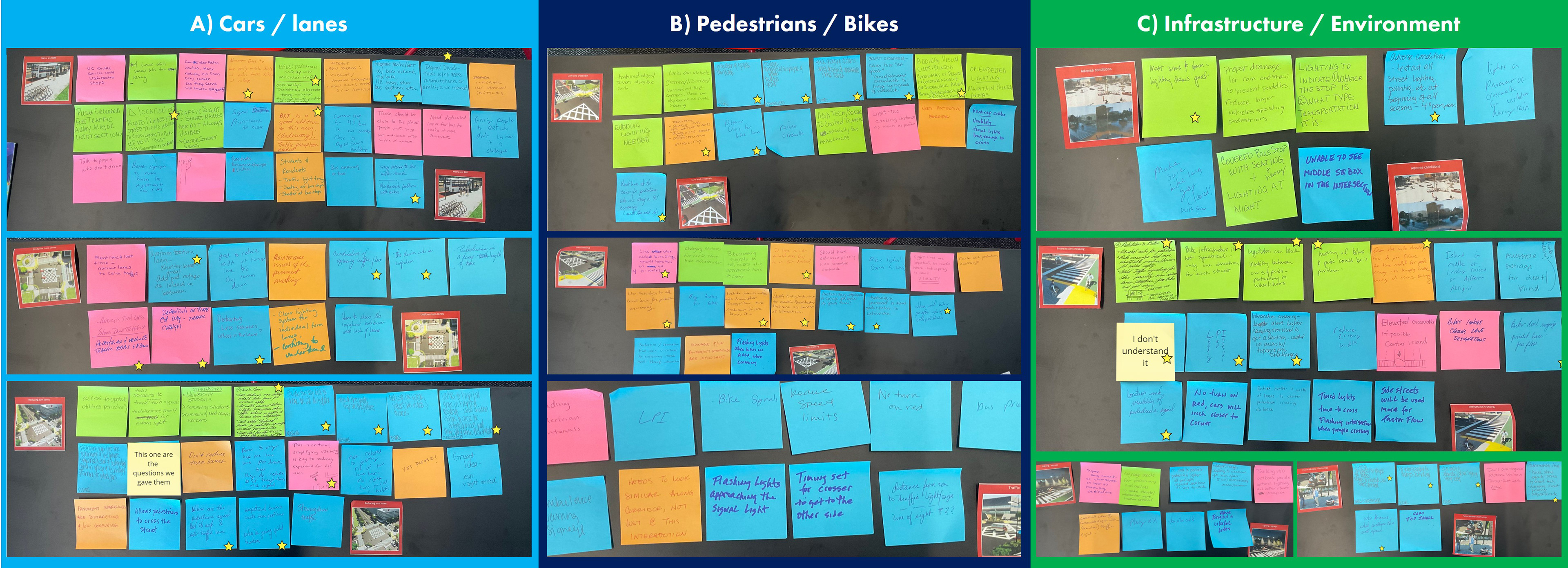
Post-it note samples from stakeholder workshop
360 Video Data Collection
Analysis
•Consolidated qualitative workshop data into a structured dataset, categorizing 10 themes and 16 clusters, each outlining priorities and implementation variables.
•Applied AI assisted coding and analysis to identify patterns, frequency trends, sentiment, and opportunity clusters, translating qualitative inputs into measurable parameters and projections.
•Produced a comprehensive strategic report for the City of Cincinnati, converting stakeholder insights into a decision-ready roadmap for future planning and investment.
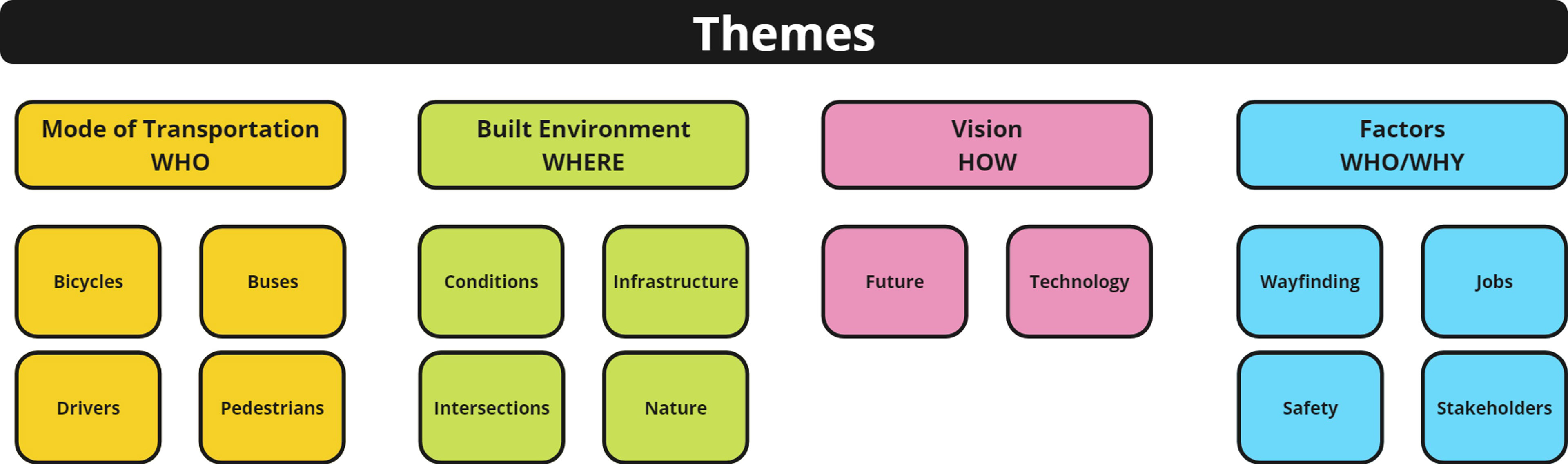
Main themes and clusters from qualitative workshop data
Creating Data Set
•A spreadsheet was created to aggregate both the qualitative feedback from post-it notes and the quantitative data from additional categories.
•Each post-it note was assigned a code which corresponded to category and focus area it belonged to. For each post-it note, the raw insight was transcribed, key words were assigned based on all the themes that had emerged, and a new category of Comment Type was added to determine if the feedback was an idea (Green), Neutral (Yellow), or Pain Point (Red). Also, the implementation timeline was considered by assigning a number from 1-3 (1=short, 2=near, 3=long term).
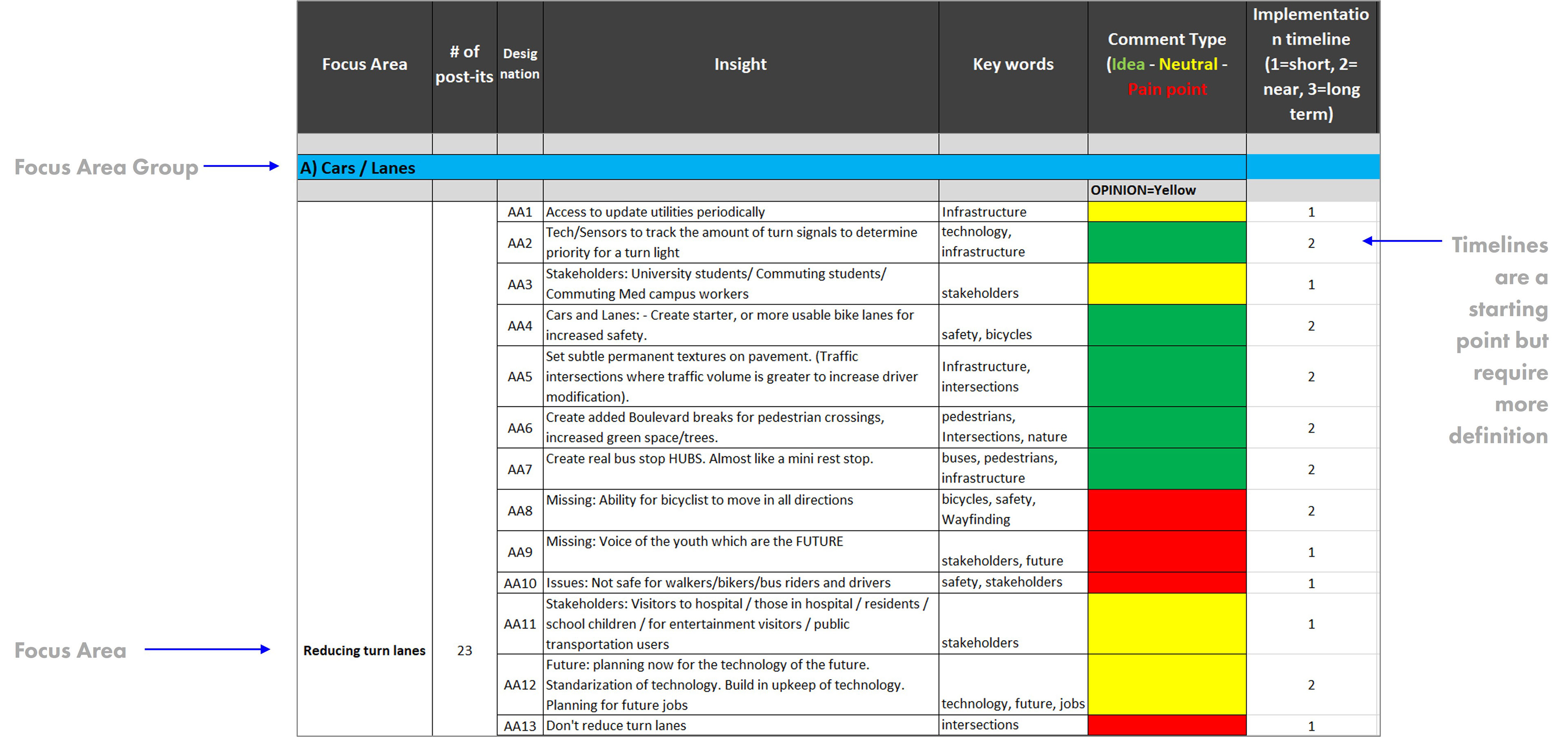
Data set sample

Overall Data set
AI Qualitative Analysis
•Used Generative AI tools and custom GPTs to analyze large volumes of transcribed workshop and co-design data.
•Identified 15+ recurring themes, terminology frequency, sentiment patterns, and opportunity clusters across stakeholder feedback.
•Mapped and structured qualitative insights into clear data visualizations, translating rich input into actionable patterns for city decision makers.
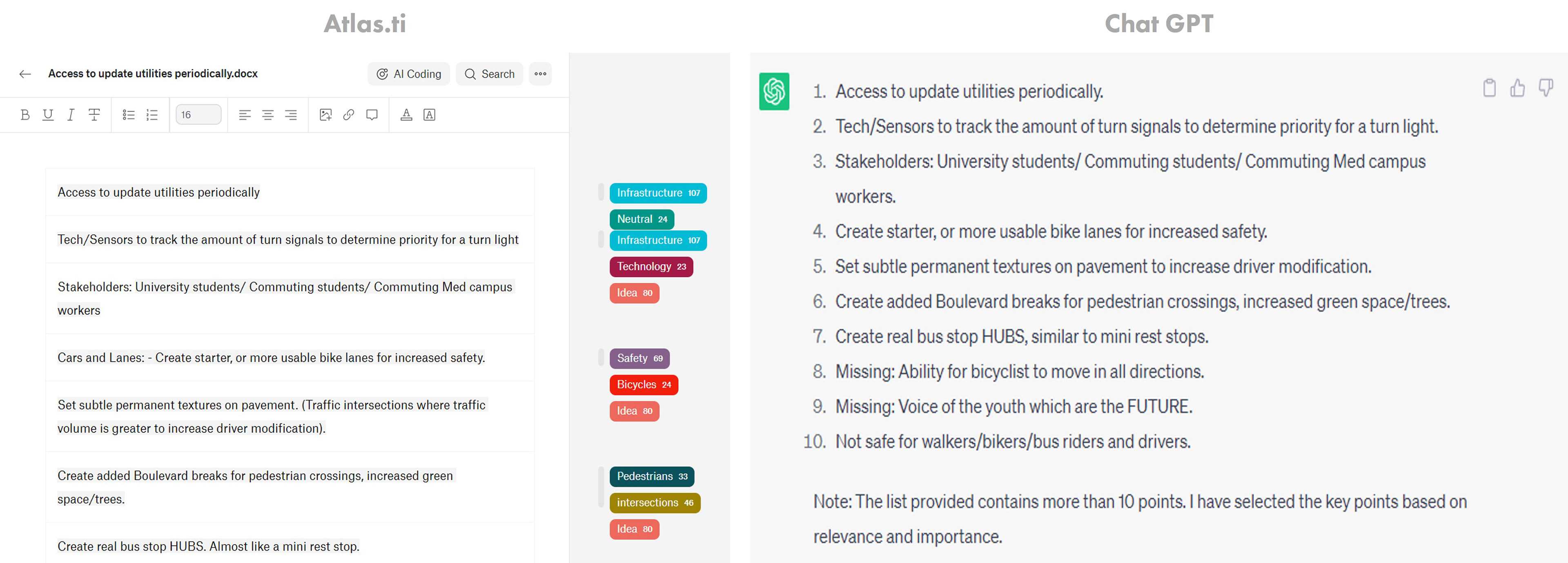
GenAI transcript and data set coding
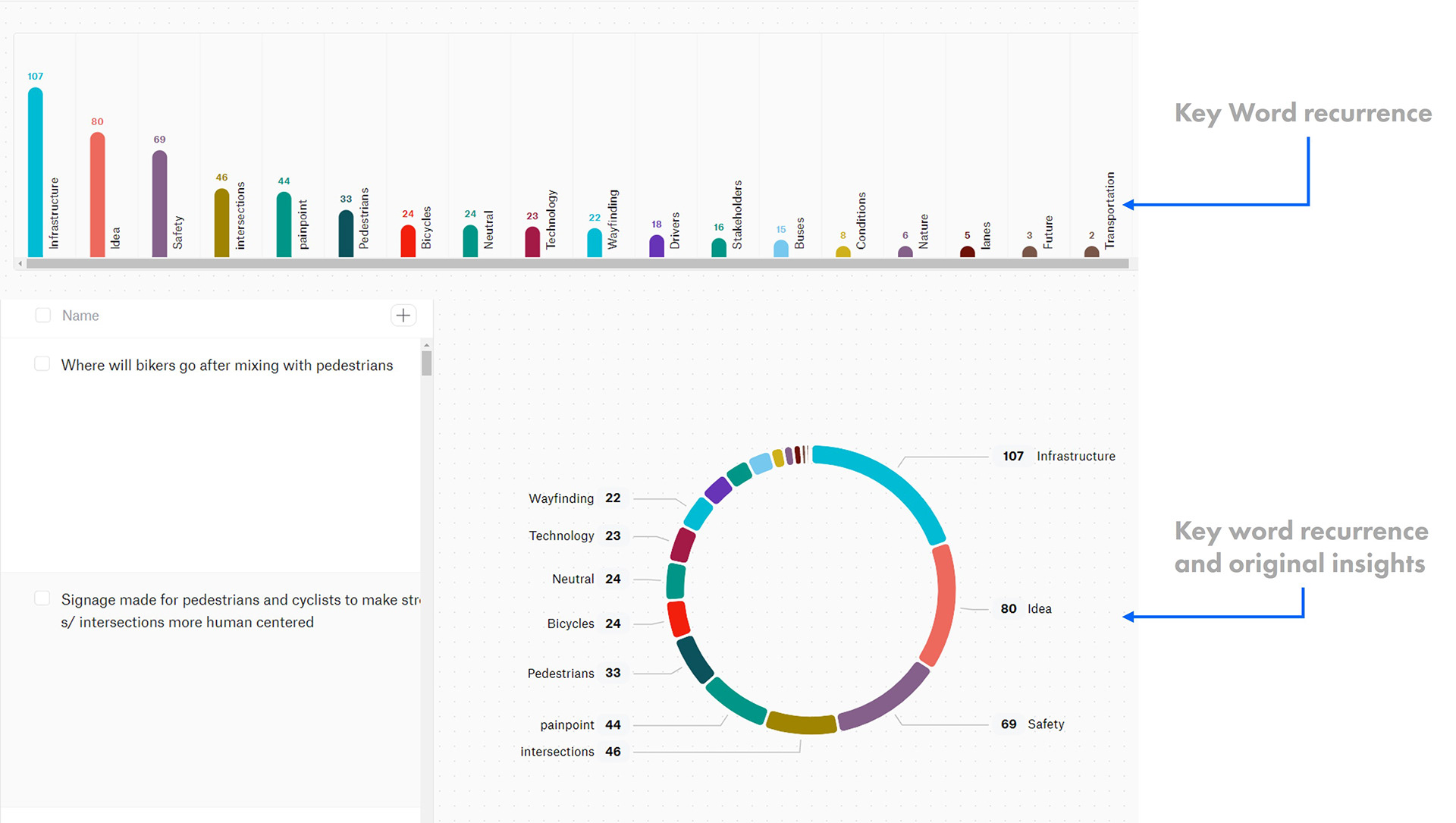
GenAI data visualization
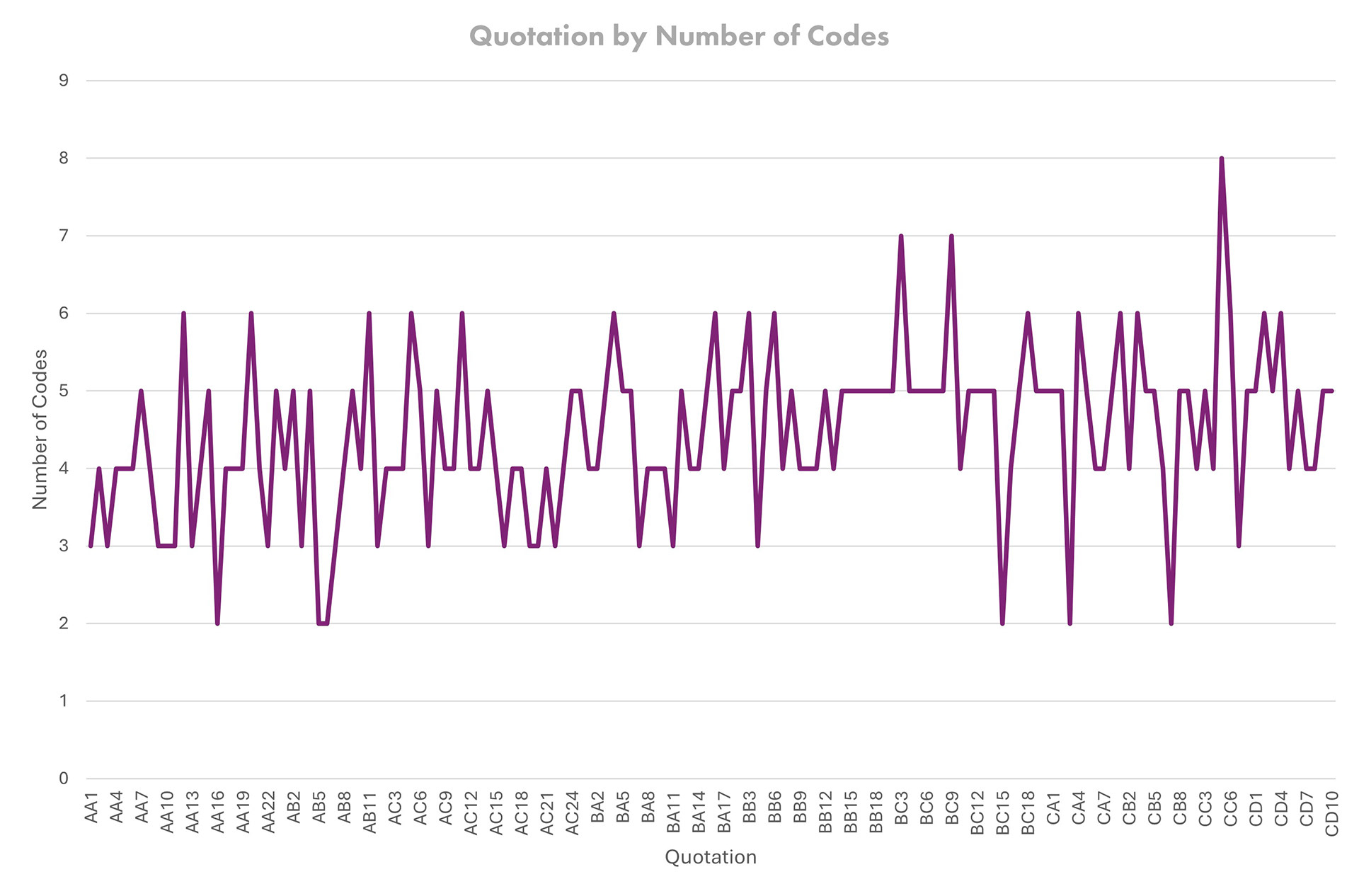
From Qualitative to Quantitative Analysis
Introducing numerical parameters to the data, then identifying patterns via data projection

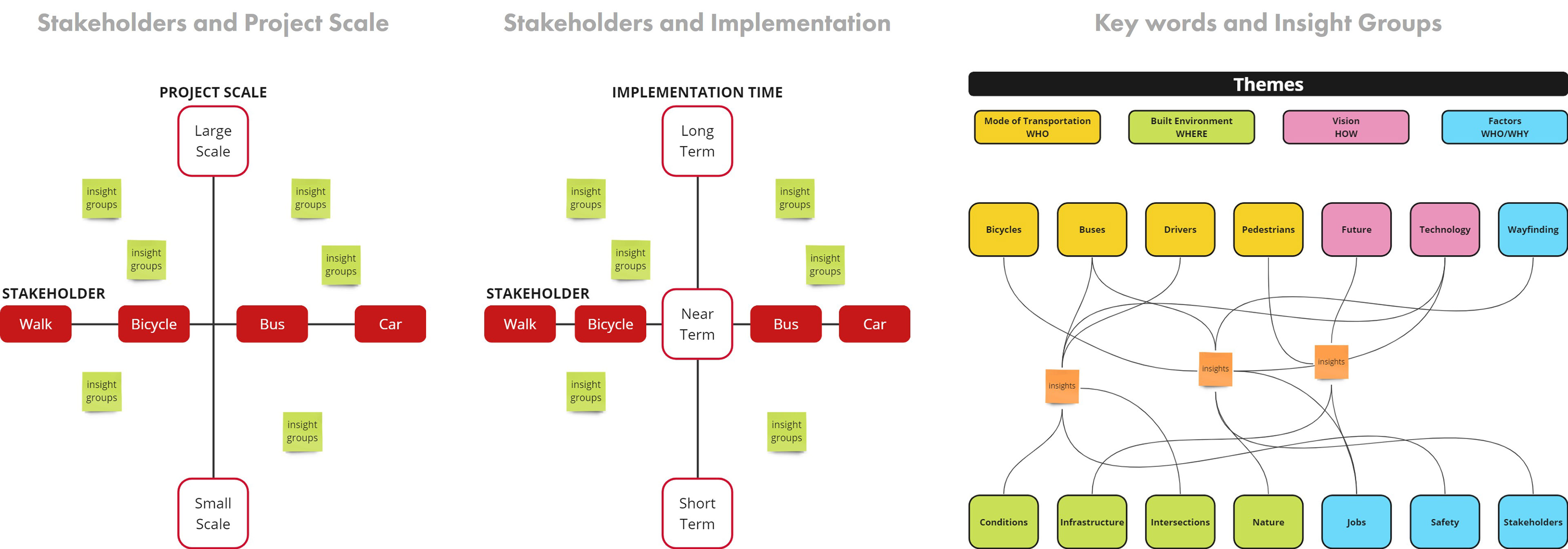
Additional Mapping Exercises
Creating data mapping frameworks for internal validation
50+ Local Residents' Community Workshop
•Hosted 3 community workshops engaging 50+ local residents across age groups, including young professionals, older adults, and kids, to review and react to the proposed Innovation Corridor design.
•Deployed mixed UX research methods including Digital Twin walkthroughs on large screens, full VR simulations, mobile AR experiences via tablet and QR access, structured surveys, and recorded qualitative feedback.
•Collected survey 50+ responses and audio-recorded insights, transcribed and coded using AI assisted qualitative analysis to identify recurring themes, priorities, and community concerns.
•Generated community-driven recommendations that were incorporated into the final strategic report delivered to the City of Cincinnati.
•Established a repeatable facilitation framework for testing Digital Twins using digital, VR, and mobile AR tools to support inclusive, technology-enabled civic engagement.
Final Report
•Delivered a comprehensive strategic roadmap consolidating UX research, co-design outputs, Digital Twin insights, AI enabled analysis, and urban design data into a single decision-ready document.
•Structured around clear 15 priority areas for the City, cost-benefit considerations, and quality-of-life metrics, the report translates stakeholder expertise into and Implementation Roadmap for the next 1, 2, 5, and 10 year timeframes.
•Now used by the City of Cincinnati to guide planning, budgeting, long-term investment decisions, and refinement of the Cincinnati 2030 Plan.
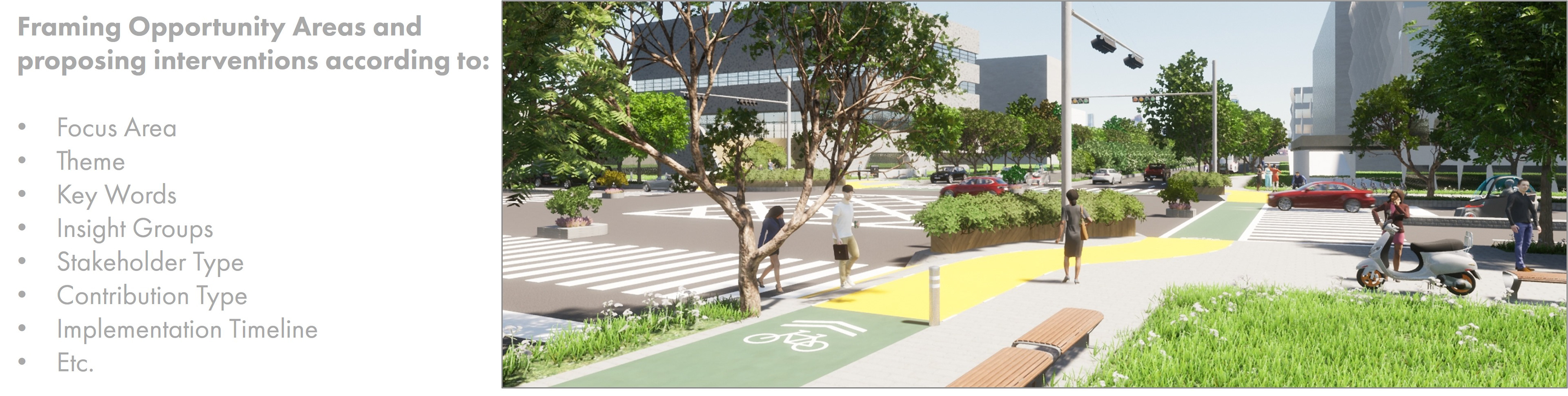
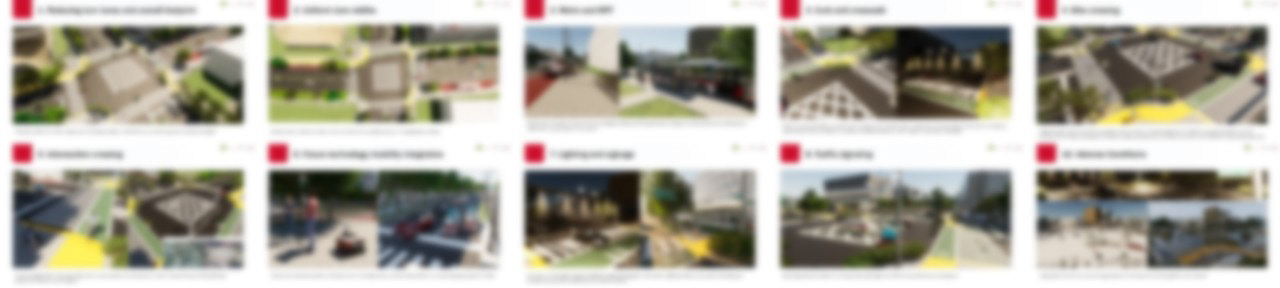
Blurred sample of recommendations from Final Report