
Leading a multi-year collaboration with Boeing spanning 8 U.S patents, 50+ future concepts, 2 visits to Boeing headquarters, and the most prestigious international aviation award.
Timeline: Several projects from 2019-2025
Industry: Aerospace / Aviation
Roles: Research Project Lead.
Team included Innovation and Aeronautic experts from Boeing, 3 outside consultants, 1 PM, 2 co-leads, and 20+ undergraduate and graduate students per project.
Funding Amount: NDA Protected
Results & Impact
• Delivered foundational research across 3 projects, producing 50+ future-facing concepts and business cases which support stakeholder alignment on decision making, resulting in 8 awarded U.S. patents, and one concept earning the aviation industry's Crystal Cabin Award.
•Deployed UX research and mixed methods including interviews with 15+ airline / aviation stakeholders, 20+ usability tests, 30+ user journeys, 20+ persona profiles, and 20+ immersive prototypes that support each concept and business case.
• Established foundational work for roadmap planning by aligning design, engineering, and executive leadership around a shared 2040 vision, enabling confident innovation, investment prioritization, and strategic decision making under NDA.
• Focus: Reimagining the future passenger aviation experience and associated business models through user-centered research and long-term strategic foresight.
• Methods: User research, journey mapping, service blueprinting, trend/market forecasting, and VR prototyping to explore and validate future aviation concepts.
• Confidentiality: All data, insights, and outcomes are proprietary to Boeing and under NDA, with the exception of awarded patents and publicly recognized results.
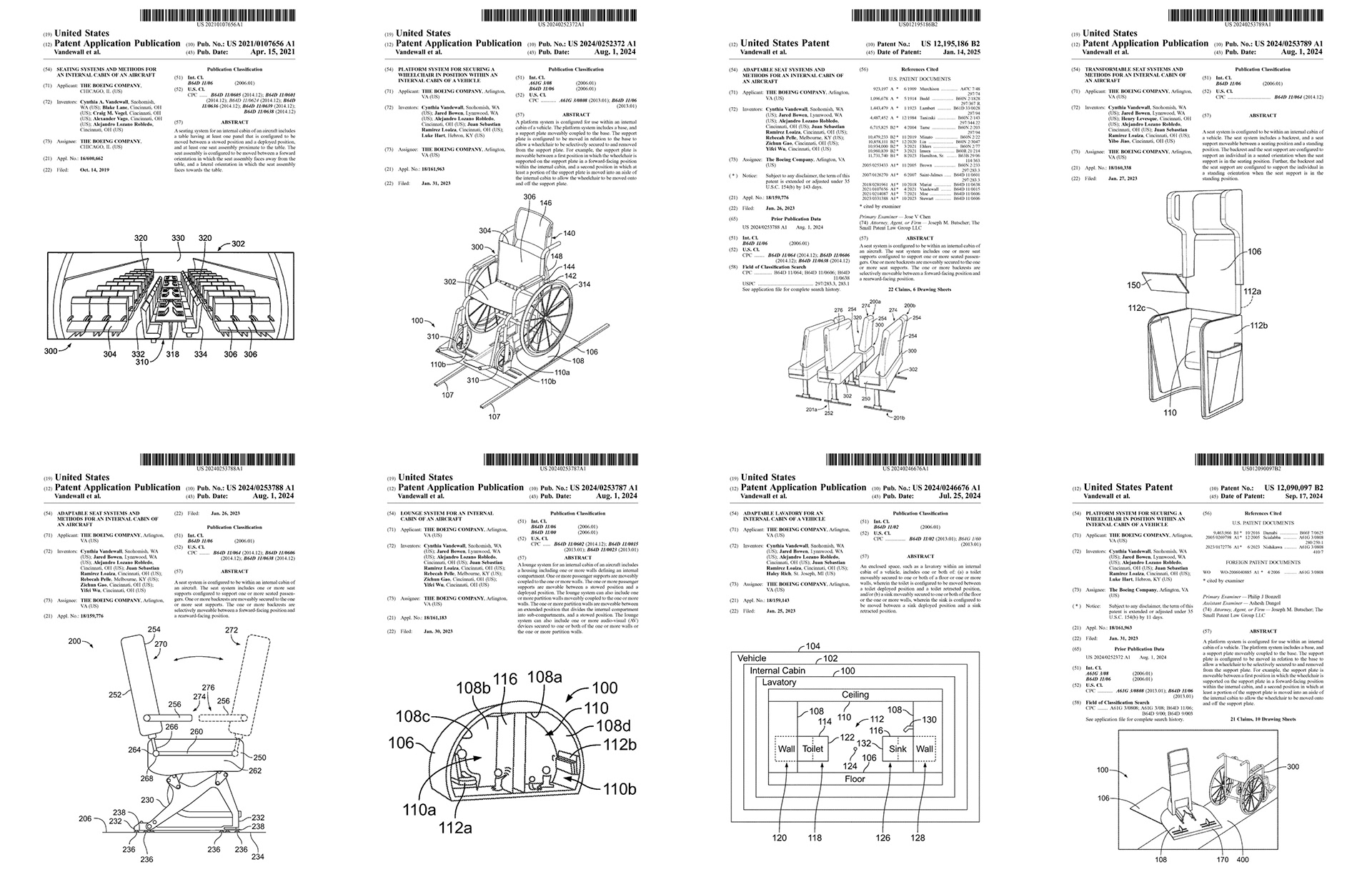
8 U.S Patents
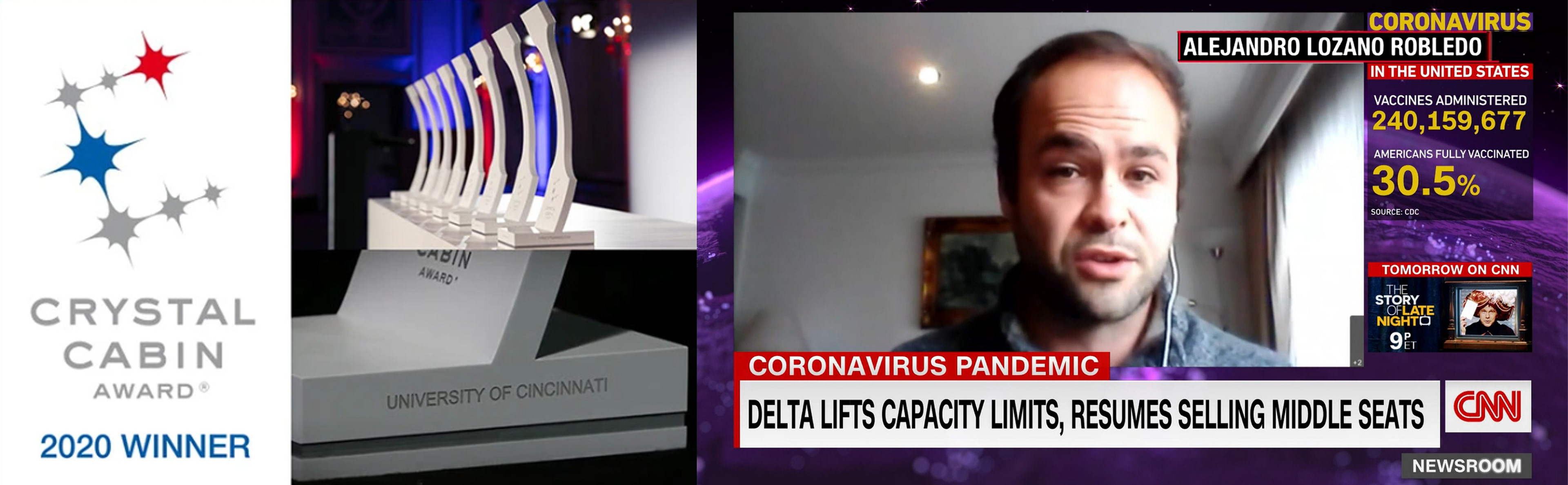
Crystal Cabin Award
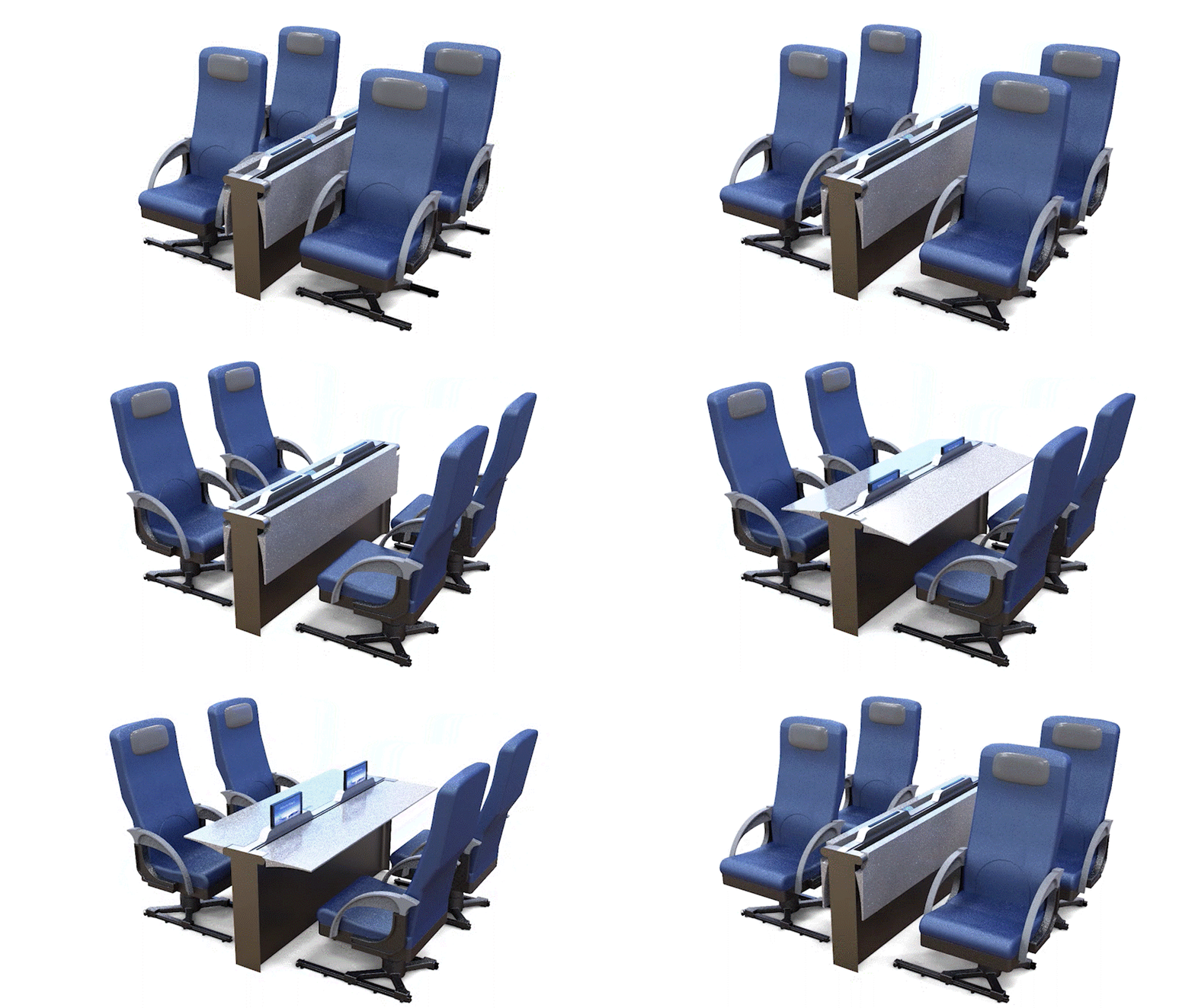
Coffee House Cabin
• The concept won the 2020 Crystal Cabin Awards in Hamburg, Germany.
• This is the global aviation industry event of the year. Further outcomes were presented in news outlets like CNN and C-12 alongside multiple media articles.
• The concept was also patented by Boeing under: U.S No. 19-1607-US-NP Seating Systems and Methods for an Internal Cabin of an Aircraft.
Research Process
• Led a multi-year research collaboration (2019–2023) with Boeing, directing 40+ researchers and designers across design, engineering, and human factors.
• Applied 10+ UX research methods, 5+ service design frameworks, and immersive AR/VR/XR prototyping, to explore and test future passenger aviation concepts.
• Translated research into 50+ future concepts, immersive prototypes, executive presentations, and 8 awarded U.S. patents, informing long-term strategy and roadmap planning under NDA.
Phase 1: Understanding
• Applied proprietary innovation and UX research methods such as market benchmarking and trends forecasting, to define high-value opportunity areas for passenger aviation in 2040.
• Conducted mixed primary and secondary research, including 15+ stakeholder interviews with airline crew (e.g., 5 Delta flight attendants), STEEP analysis, 8 future persona archetypes, journey mapping, and ecosystem mapping.
• Translated technological, societal, and market signals into 10 opportunity spaces, that Boeing leadership then approved for deeper research and further concept generation.
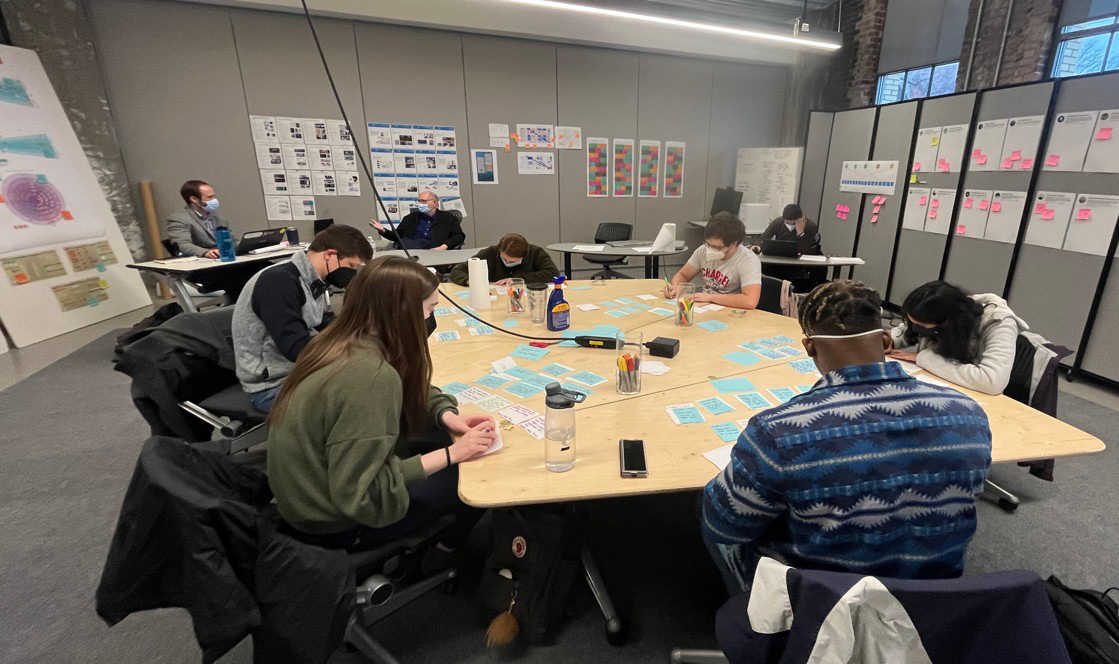
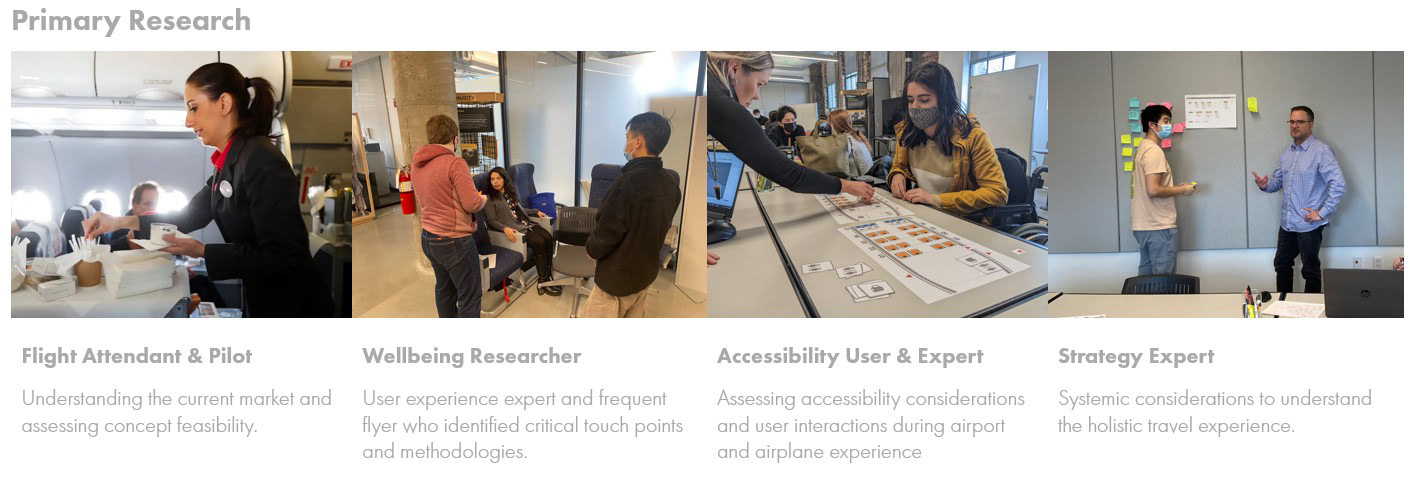
Secondary Research
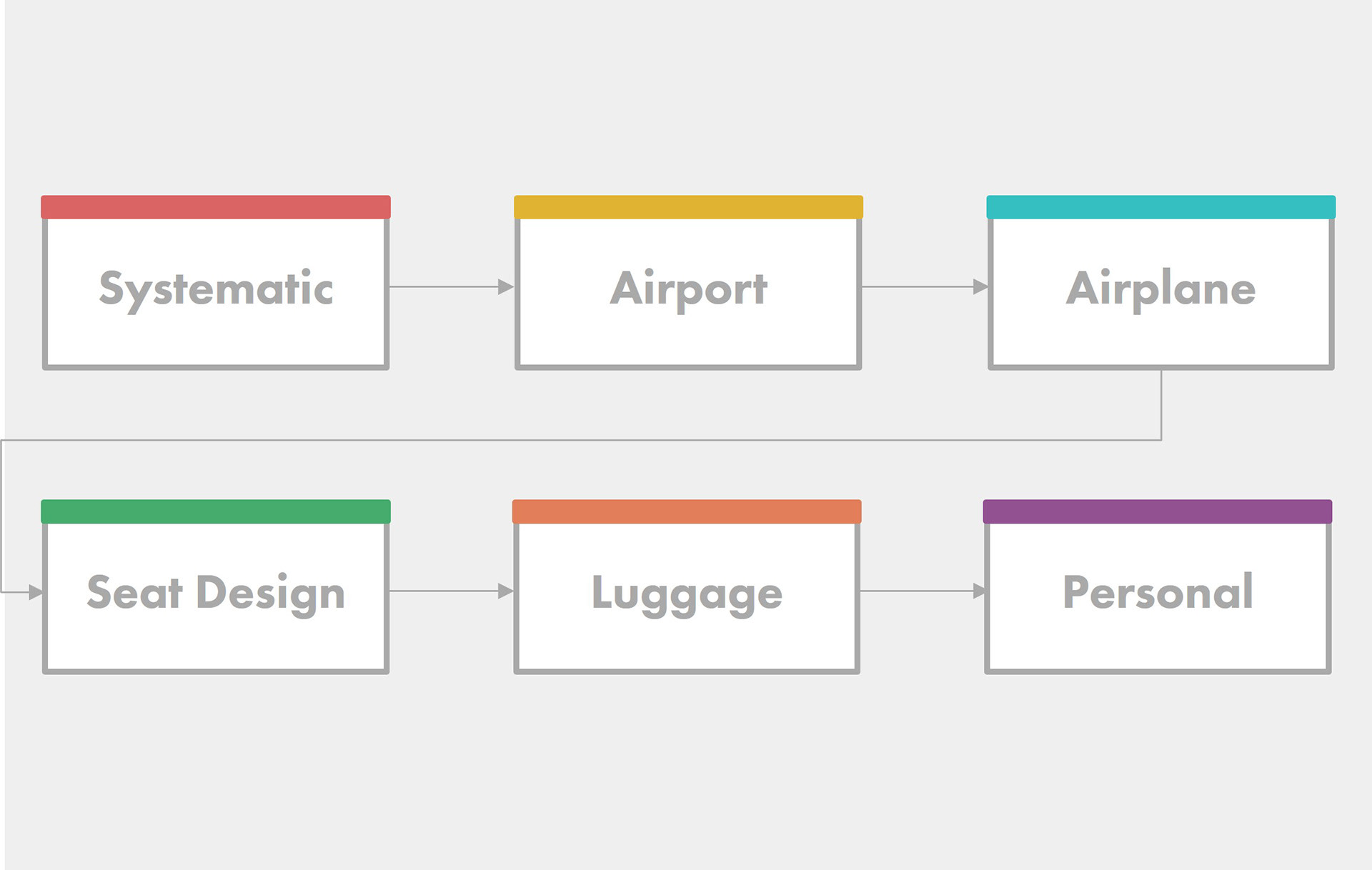
Conducting User Journeys, STEEP Factors Analysis, Trend Forecasting, Persona Archetyping, alongside other design research methodologies, to frame 50+ concepts, each with a concrete scenario, outlining the user personas, trends involved, and and opportunity areas in terms of the general system, airport, airplane and passenger experience.
50 Concept Cards
Each concept was evaluated under specific criteria to understand feasibility, implementation, trends, personas, and industries impacted
From Macro to Micro factors
Each concept was evaluated in terms of systemic impact, from the larger city and STEEP factors, to the airport experience, airplane, and individual UX.

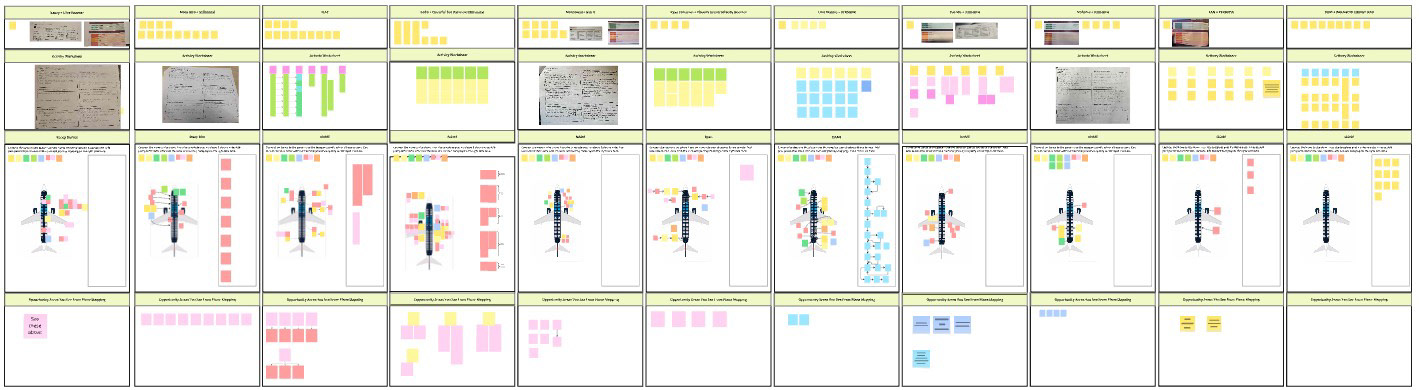
Concept Evaluation Matrix
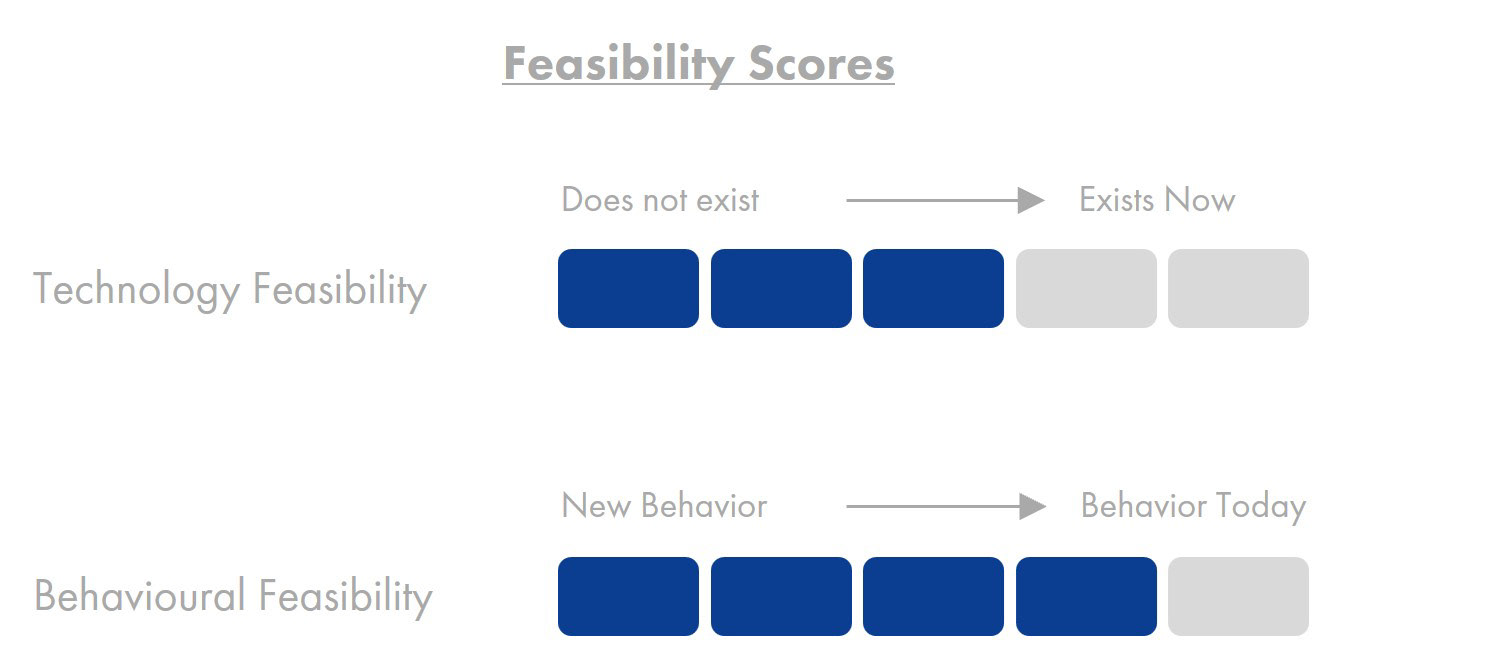
Iterative mapping exercises were conducted to narrow down into 50 concepts into more complete scenarios including more detailed user journeys for each persona archetype that is involved, specific research on the technologies and trends, and a feasibility score which ranked from 1-5 the technological and behavioral feasibility of each concept.
Concept Evaluation Matrix
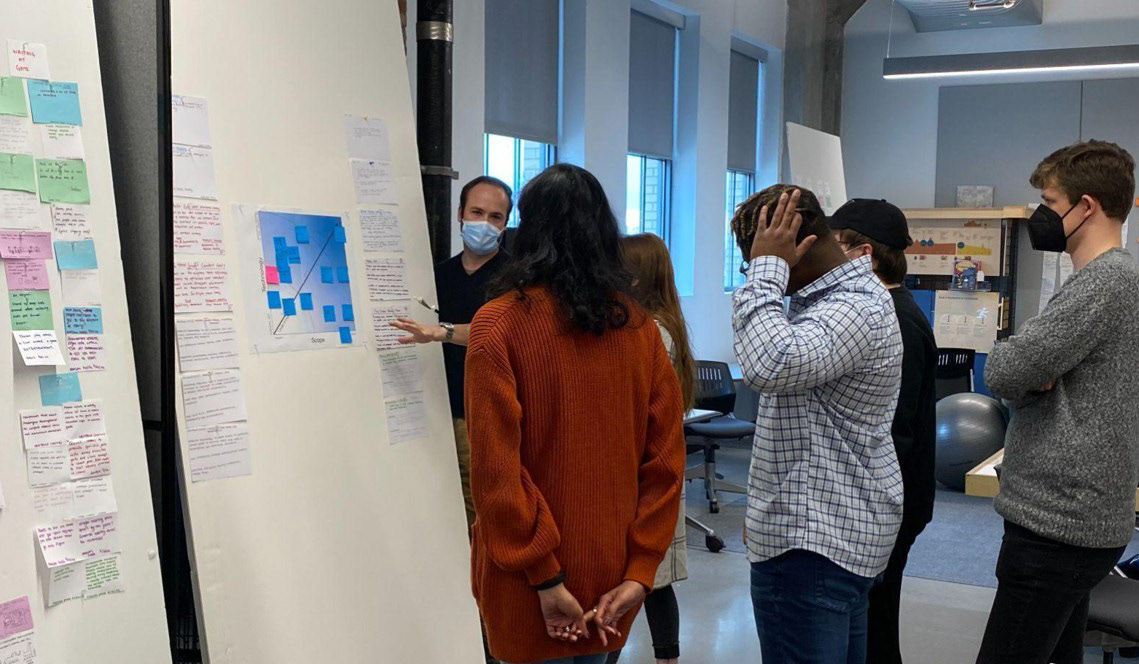
Phase 2: Ideation
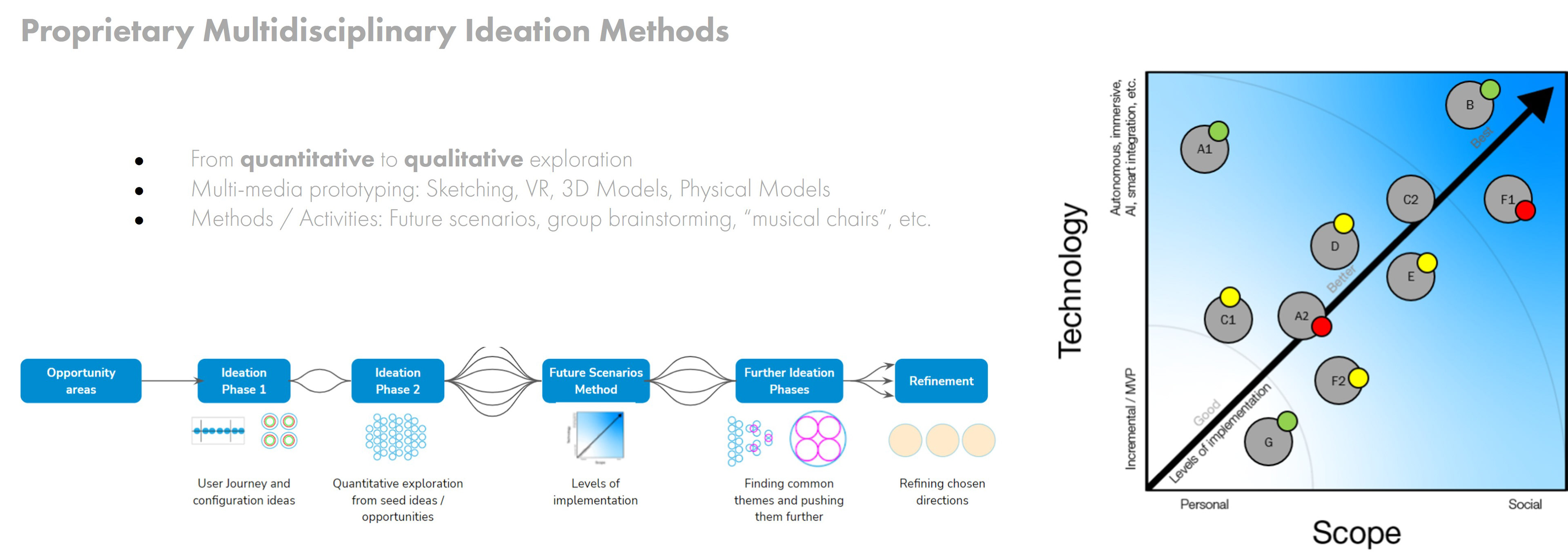
•Translated insights into 50 testable concepts, each containing a concept card, evaluation matrix, and future scenario projection (see below) using proprietary ideation and multi-level prototyping methodologies. Each
•Iterated concepts across analog, physical, digital, AR, VR, and XR environments, supported by structured co-design sessions with industry partners.
•Generated 50+ future-facing concepts addressing airport operations, aircraft interiors, and the end-to-end passenger journey, each evaluated for strategic relevance, feasibility, and long-term value.
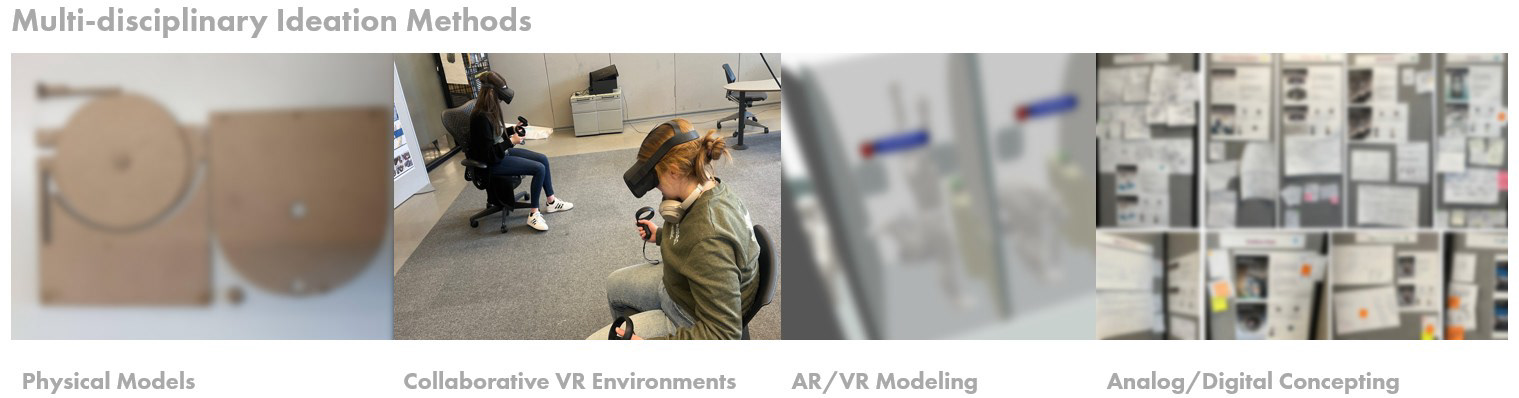
Phase 3: Refinement
•Refined selected concepts into 20+ integrated future experiences combining products, service blueprints, interactions, and viable business models.
•Developed and evaluated full-scale aircraft cabin environments using 5 physical mockups and 10 immersive AR/VR simulations to assess user experience, operational feasibility, and technological readiness.
•Finalized concepts using defined selection criteria, including target user segments, enabling technologies, strategic alignment with airline and manufacturer priorities, and revenue potential.
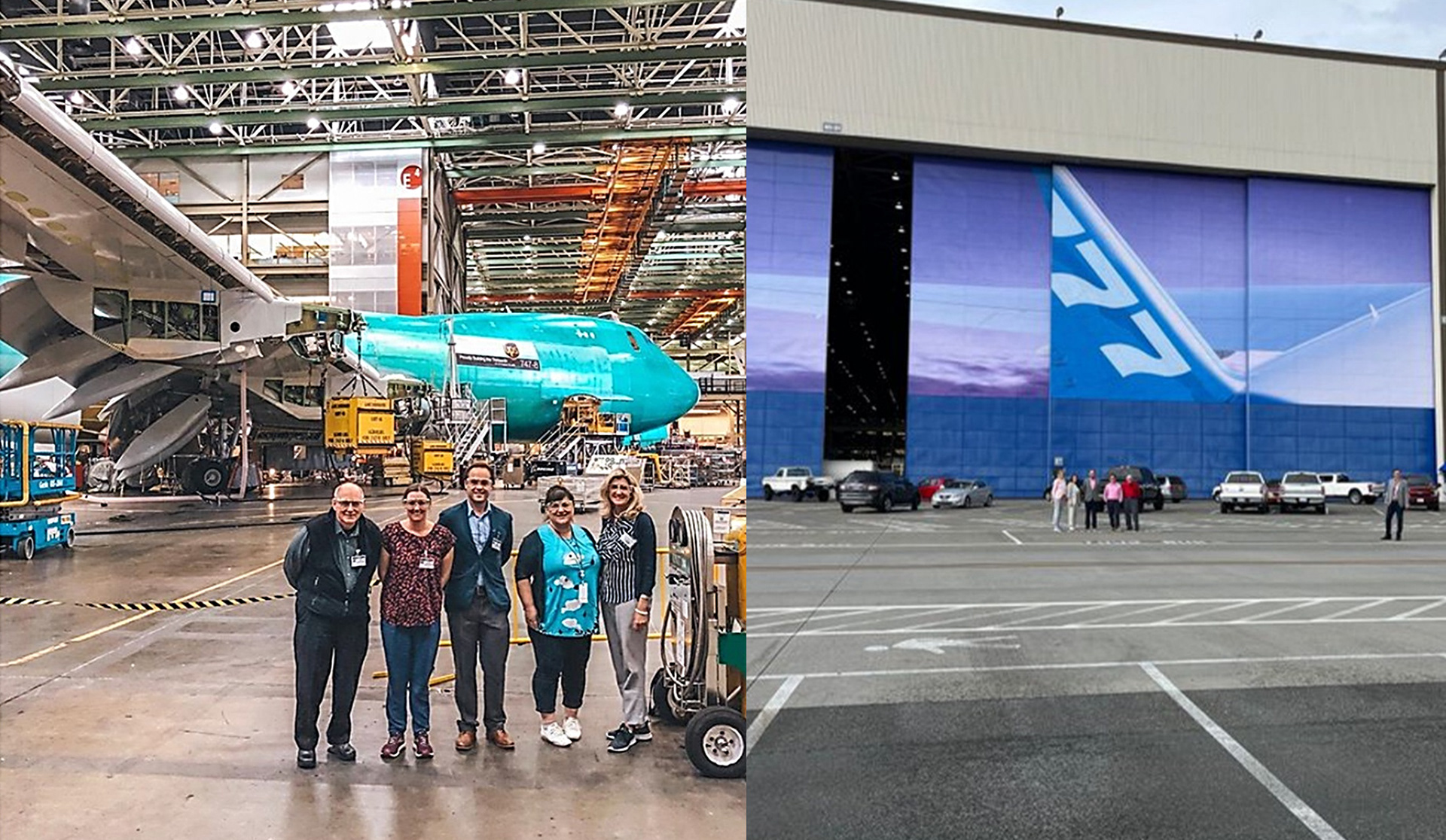
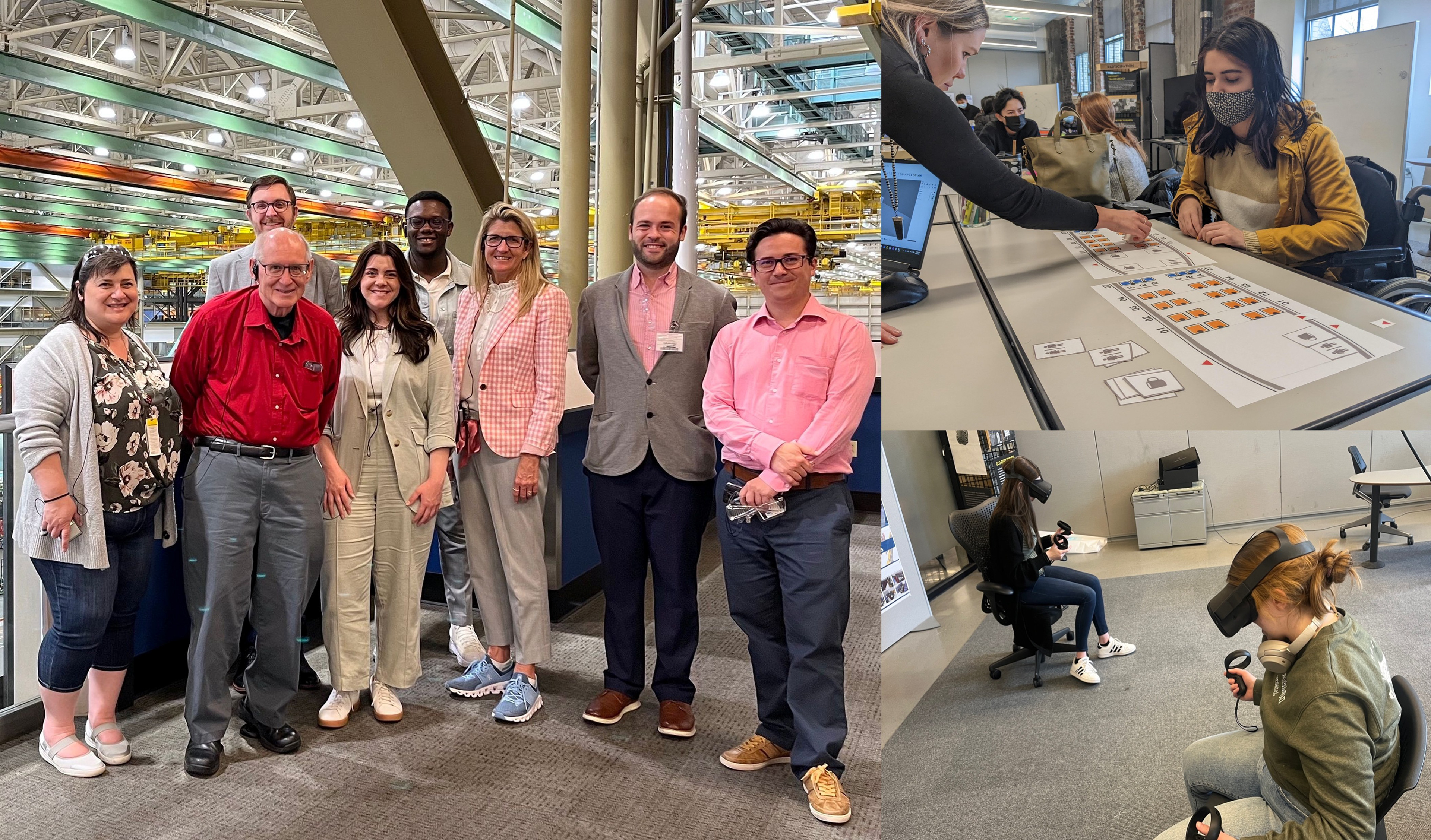
Visit to Boeing HQ in Everett, WA
Phase 4: Next Steps
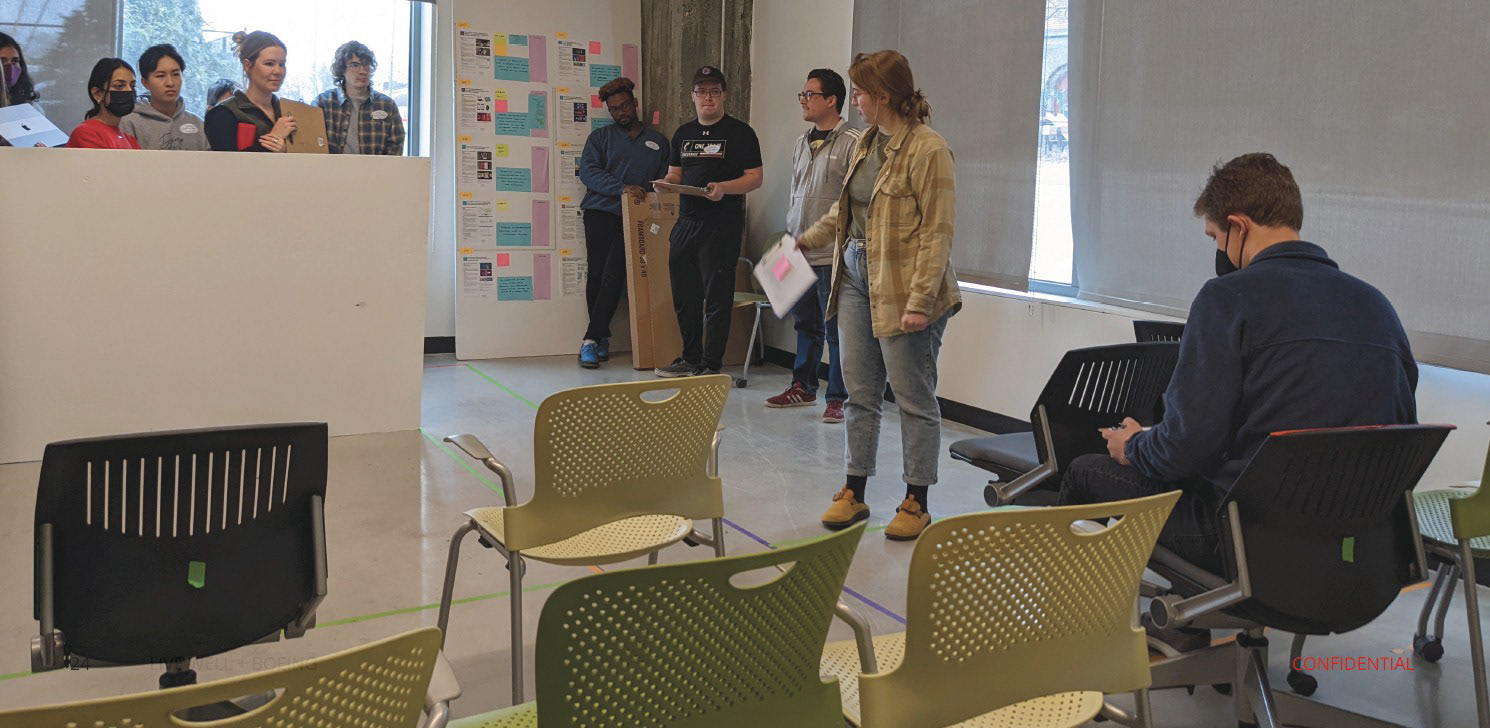
•Presented final concepts at Boeing headquarters in Everett, WA, supported by 3 internal workshops with engineering, UX, strategy, and marketing teams.
•Advanced selected concepts through internal review and IP processes, resulting in 8 awarded U.S. patents and recognition through the Crystal Cabin Award, in addition to 10+ media interviews with CNN, Channel 12 among other outlets.
•Final concepts and strategic reports have informed 20+ new proposed products and services that Boeing is developing internally and assessing for commercial viability under NDA.
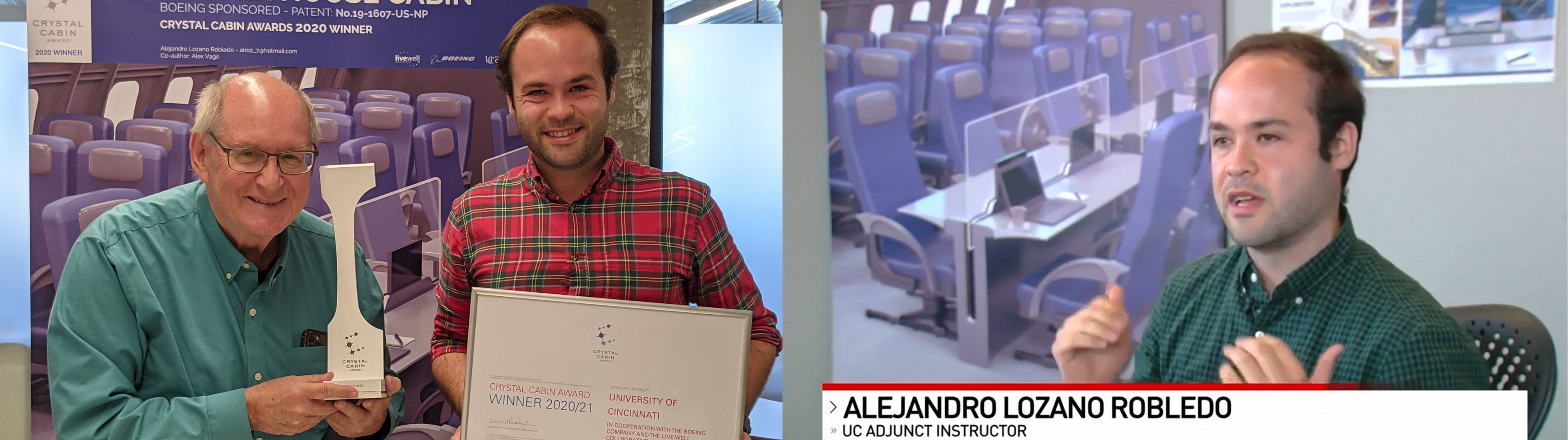
Crystal Cabin Award and Channel 12 interview
Interested in more information?
Due to confidentiality and NDA protections, specific concepts and detailed project outcomes cannot be publicly shared. However, I would be glad to discuss the design research and innovation process, the strategic frameworks applied, and the resulting IP protected outcomes in more detail upon request.